
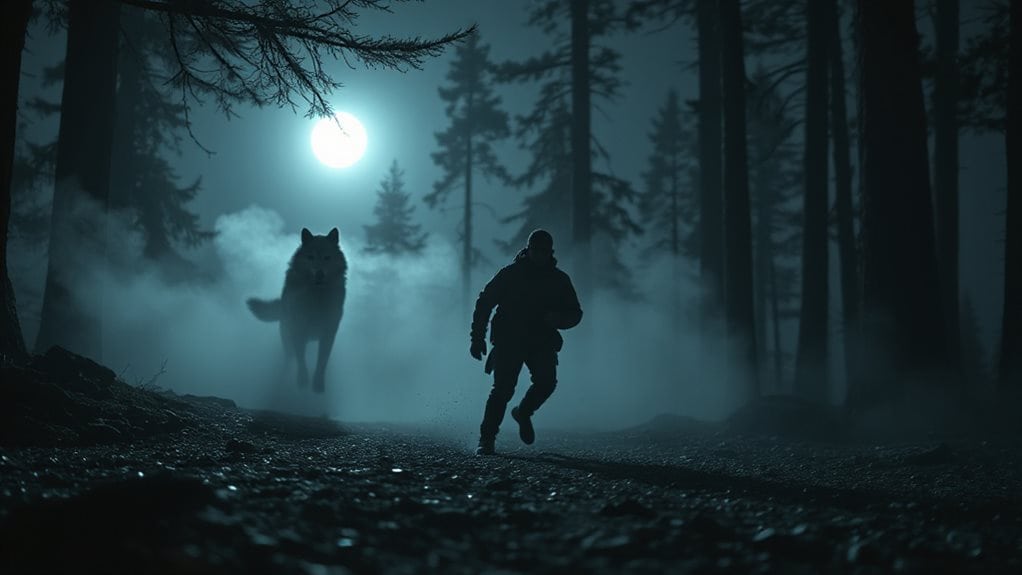
You’re dreaming of a wolf chasing you because your subconscious is flagging repressed anxieties, instinctual drives, and unresolved conflicts that need attention. The chase often mirrors hidden fears, such as vulnerability or postponed decisions, while pack dynamics amplify the threat, especially if an alpha wolf leads. Color matters: a white wolf suggests spiritual guidance, grey points to loyalty and compromise, and black reveals shadow aspects. How the dream ends—escape, capture, or halt—signals whether you’re avoiding, confronting, or resolving the issue, and the next section explains practical steps you can take.
What Does a Wolf Chase Dream Symbolize?

What does a wolf chase dream symbolize? You’re likely confronting anxieties or repressed emotions that need attention. The dream stirs fear and wonder, hinting at hidden emotional healing during personal growth. It reflects instinctual drives, strength, and a wild, masculine side demanding control. Spiritually, the wolf acts as a shamanic guide, urging trust in gut instincts and metamorphosis. Psychologically, it signals aggression, avoidance, and inner conflicts awaiting recognition. Much like dreams of unknown dead, this kind of chase can highlight unresolved issues and emotional terrain that needs acknowledgment and healing. Black wolf represents concealed danger and spiritual darkness that may be lurking in your life.
What Hidden Fears Trigger a Wolf Chase Dream?
You might notice that a wolf chase often mirrors repressed anxiety, because the tireless pursuit feels like an internal alarm you’ve been ignoring.
It also signals unresolved conflict, as the animal’s aggression can represent a confrontation you’ve postponed or a decision you’ve avoided.
Finally, the dream can expose a fear of vulnerability, since being chased highlights how exposed you feel when your defenses slip.
In some cases, this kind of pursuit dream overlaps with themes of suppressed feelings that, if left unaddressed, can slowly affect both your emotional balance and overall well‑being.
Repressed Anxiety
Often, the unsettling feeling of being chased by a wolf in a dream stems from repressed anxiety that you may not recognize in waking life. You might be unconsciously hiding childhood guilt, such as forbidden desires toward a sibling or castration fears symbolized by a tailless wolf. These hidden tensions surface as a predator chase, reflecting unresolved id‑superego conflict and projecting repressed aggression onto the animal.
Unresolved Conflict
The link between repressed anxiety and the wolf‑chase scenario becomes clearer when we consider unresolved internal conflict. You may be wrestling with trust issues, torn between authentic instincts and socially acceptable behavior. The wolf symbolizes suppressed emotions and the wild parts of yourself that clash with external expectations. This tension creates a feeling of powerlessness, mirroring hierarchical pressures and a mismatch between intuition and rational decisions.
Fear Of Vulnerability
Why do hidden fears of vulnerability often surface as a wolf chasing you in a dream? You may be protecting your emotional exposure, fearing rejection, shame, or grief. The brain misreads harmless thoughts as threats, especially if childhood experiences taught you that openness invites danger. Social anxiety, perfectionism, or past humiliation amplify this schema, turning a simple stress cue into a relentless predator in sleep.
How Do Pack Dynamics Affect a Wolf Chase Dream?
You’ll notice that the pack hierarchy see the intensity of the chase, because the presence of an alpha pair signals a coordinated threat that your subconscious amplifies.
When the alpha’s role in fear shows up, you’re interpreting the dream as a warning from the pack’s leader, which adds a layer of authority to the danger.
The collective energy of the whole pack then magnifies the pursuit, turning a single wolf’s chase into a shared, high‑stakes experience.
Much like how social media’s algorithmic amplification effect intensifies emotional reactions to curated images, a chasing wolf pack in dreams can magnify underlying anxieties and insecurities until they feel like an overwhelming, coordinated threat.
Pack Hierarchy Influence
How pack hierarchy shapes a wolf‑chase dream hinges on the roles each member plays within the group. You notice the strongest wolves leading, the weaker trailing, and the middle protected by she‑wolves with pups. This arrangement mirrors wild travel formations, where the weakest set the pace and the experienced guide the hunt. Your mind translates these dynamics into a chase, reflecting the pack’s fluid, age‑based roles and collective safety strategies.
Alpha’s Role in Fear
When an alpha wolf asserts its dominance, the resulting power dynamics can turn a seemingly ordinary chase into a vivid manifestation of fear.
You notice the alpha’s high tail and confident stance, signaling control that heightens vigilance.
Its leadership shapes pack movement, making the pursuit feel organized and unwavering.
The alpha’s role in protecting territory and coordinating hunts amplifies perceived threat, translating into a sharper, more focused dream fear.
Collective Energy Amplification
What makes a wolf‑chase dream feel so intense is the way pack dynamics amplify collective energy, turning a single predator into a coordinated force. You notice the pack’s synchronized movements, each member assuming roles that enhance hunting efficiency. This shared intelligence and hierarchical coordination magnify threat perception, making the chase feel larger, more persistent, and harder to escape than a lone wolf’s pursuit.
What Do White, Grey, or Black Wolves Signify in a Chase Dream?
Why do the colors of wolves matter when they chase you in a dream?
A white wolf signals spirit, hope, and protective guidance, yet it also hints at isolation and hidden threats to your purity.
Grey wolves emphasize loyalty, adaptability, and the need for compromise within groups.
Black wolves reveal shadow aspects, repressed emotions, and potential self‑destructive patterns that demand careful steering.
Just as the robin’s sacred life energy signals renewal and divine guidance, a chasing wolf’s color highlights whether your fear points toward spiritual awakening, emotional healing, or confronting buried shadows.
How Should You Interpret a Wolf Chase Dream’s Ending?

The color of the wolf you saw—white, grey, or black—sets the emotional backdrop, but the way the chase ends carries the real diagnostic weight.
If you escape, you’re temporarily avoiding a problem, yet the threat may return, hinting at lingering depression.
Capture signals a forced confrontation with hidden traits, prompting metamorphosis.
A halt means your subconscious resolved the danger, restoring safety.
In some cases, a halted chase can also suggest that your mind has temporarily outwitted its own psychic censor, allowing formerly blocked emotions or instincts to surface in a symbolic, manageable form.
What Real‑World Actions Can You Take After a Wolf Chase Dream?
When a wolf chase dream jolts you awake, practical steps can convert that unsettling image into constructive habits rather than lingering anxiety.
Begin with mindfulness meditation and deep breathing to calm fear, then journal the dream’s emotions to spot patterns.
Schedule therapy for emotional regulation, limit triggering media, and use weekly situational checks to enhance vigilance and integrate the shadow self.
Wrapping Up
You’ve learned that a wolf chase dream reflects underlying anxieties, social dynamics, and symbolic colors, each offering clues about hidden threats and personal instincts. By examining the chase’s context, pack behavior, and the wolf’s hue, you can pinpoint specific fears and how they manifest in waking life. The dream’s ending—whether you escape, confront, or are caught—guides practical steps, such as confronting stressors, strengthening support networks, or seeking professional help. Applying these insights turns the dream into a useful self‑assessment tool.