
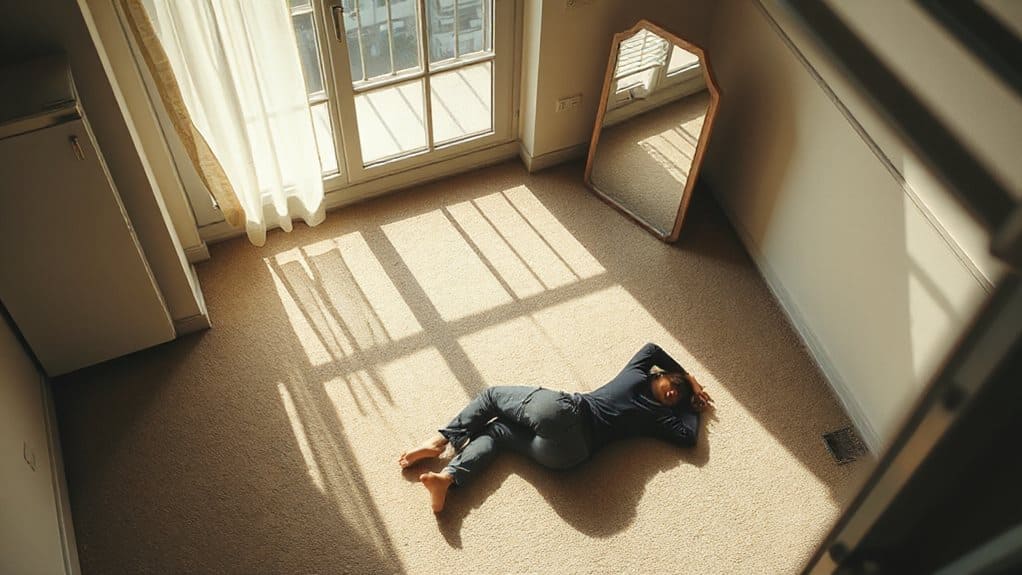
You dream in third person to gain distance from intense emotions, letting you observe yourself like a character in a scene. This shift often reflects anxiety or a need for self-monitoring, with your brain’s temporoparietal junction helping adjust viewpoint. While first-person dreams ground you in the body, third-person views support reflective awareness. Men and those from Eastern cultures report it more often. You’re likely processing experiences with a detached, analytical eye—especially if you’re thoughtful or prone to rumination. There’s more to uncover about how this shapes self-understanding.
Understanding Third-Person Dream Perspectives

You might think of dreams as inherently personal, but when you dream in the third person, you’re not just watching yourself—you’re stepping outside your own mind to observe it. This shift reflects reflective consciousness, where you see yourself as an avatar. In some traditions, this kind of stepped-back awareness is interpreted as a form of inner wake‑up call that invites you to pay closer attention to your life path and spiritual state.
Brain changes in REM sleep, like reduced parietal and prefrontal activity, allow this flexible self-perspective, blending self and space in a way that feels real yet detached. This detached viewpoint mirrors the observer dream phenomenon, where the dreamer witnesses their own actions from an external perspective, often linked to the temporoparietal junction’s role in self-other differentiation.
How Common Is Dreaming in the Third Person?
You’re more likely to dream from your own point of view, with about 53% of people reporting first-person viewpoint as their default.
Still, over 45% regularly experience dreams in the third person, especially if you’re prone to anxiety or come from an Eastern cultural background.
These patterns aren’t random—they’re shaped by personality, culture, and how you process emotions. A range of factors like sleep quality, mental health, and even certain medications can also influence how often you remember these dreams and how vivid they feel.
How Often It Occurs
Occasionally, people experience their dreams as if watching themselves from the outside, but dreaming in the third person isn’t the norm for most.
You’re more likely to dream in first person, as 70% of people do.
About 11.7% always or usually see dreams in third person.
It’s more common in men and varies across cultures, with Eastern viewpoints favoring third-person more than Western ones.
Majority Dream in First Person
Most people experience their dreams as if living them directly, seeing events unfold through their own eyes. You’re far more likely to dream in first person—82% of participants do. Only about 1 in 5 report third-person views.
First-person dreaming dominates across healthy volunteers, suggesting it’s the brain’s default mode. Gender plays a role, too: women especially favor first-person viewpoints.
The Link Between Anxiety and Third-Person Dreams
While anxiety doesn’t always dictate how you dream, it often shapes the viewpoint from which you experience those dreams. You’re more likely to recall third-person dreams when anxious, as heightened arousal influences viewpoint. Anxiety, unlike neuroticism, positively predicts this shift. These dreams may mirror dissociative states, offering emotional distance. Your anxious thoughts and rumination can fuel intense, recurring dream content, linking waking stress to nighttime narratives. This can be similar to dreaming about never reaching your destination, where anxiety and a sense of stalled progress in waking life appear symbolically in your dreams.
Neuroticism’s Role in Shaping Dream Perspective
You might recall your dreams more often if you’re high in neuroticism, since it’s linked to increased dream recall—especially nightmares.
But even though you feel dreams more intensely, you’re actually less likely to experience them from a third-person viewpoint. This could be because emotional turbulence pulls you into the dream scene, making it harder to step back and see yourself from the outside.
Interestingly, people who are high in neuroticism may also be more vulnerable to dreams that reflect emotional tiredness or anxiety, mirroring the kind of exhaustion and inner tension they experience while awake.
Neuroticism and Dream Recall
Because neuroticism shapes how you process emotions and stress, it also plays a key role in how often you remember your dreams.
You’re more likely to recall dreams, especially intense or negative ones, if you score high in neuroticism. This trait links strongly with nightmare frequency and emotional dream content, making dreams harder to forget.
Thought suppression backfires for you, increasing dream recall.
Emotional Memories Link
Emotional memory acts as a quiet designer in the background of your dream life, shaping not just what you dream but how you experience it.
You process intense dream emotions more vividly if you’re high in neuroticism, which amplifies emotional intensity but reduces third-person vantage dreams. This suggests your mind may struggle to distance itself from charged content, limiting reflective dreaming despite heightened inner reactivity.
How Openness to Experience Influences Dream Recall
Often, people who are more open to new experiences tend to remember their dreams more frequently, and research supports this connection—though the strength of the link varies.
You might notice that your curiosity or imagination helps dreams stick in your mind. Studies link openness to creativity and thin boundaries, both tied to better recall. Yet, not all research agrees, suggesting other factors matter too. Keeping a consistent dream journal can further strengthen this recall by helping you track patterns and recurring symbols over time.
Thinking vs. Feeling: Personality and Dream Viewpoint
Your personality doesn’t just shape how you make decisions or interact with others—it also influences how you experience your dreams, including the vantage from which you view them.
If you lean toward thinking, you’re more likely to dream in third person, observing yourself with logical detachment. Feelers, who prioritize emotion and connection, usually dream in first person, immersed in the experience.
Emotional Memory and the Vividness of Third-Person Dreams

You might notice your dreams feel more vivid when they play out in third person, especially if you’re dealing with anxiety or emotionally charged memories. Research shows third-person dream scenes can seem clearer and more detailed, possibly because this vantage creates distance that heightens observational focus.
While first-person memories usually pack more emotional punch, third-person dreaming may draw on remote, negative experiences, making them feel surprisingly intense even from a remove.
Anxiety and Emotional Recall
Anxiety frequently shapes how you remember your dreams, especially when they unfold from a third-person viewpoint. You’re more likely to recall these dreams if you experience heightened anxiety, as it increases emotional arousal and dream intensity.
While anxiety enhances third-person recall, neuroticism actually reduces it—showing these traits affect dreaming differently. Emotional carryover from waking worry strengthens memory of such dreams, linking daily stress to nighttime replay.
Vividness in Third-Person Dreams
Viewing yourself from the outside in a dream isn’t just a quirk of imagination—it’s a window into how emotion and memory shape your inner world.
Anxiety and neuroticism amplify both emotional recall and third-person dream vividness. High sensory intensity, especially up close, enhances realism.
Amygdala activity during REM deepens emotional impact, while motor cortex activation supports imagined movement, making third-person dreams feel surprisingly lifelike.
The Science of Self-Objectification in Dreams
While you’re fast asleep, your brain doesn’t just shut down—it reshapes how you experience yourself. You may observe your dream self from the outside, a sign of self-objectification linked to reduced agency and partial metacognition.
This third-person viewpoint often arises when your brain’s self-monitoring systems are active but not fully lucid, turning you into both actor and audience in your own nocturnal drama.
Visuospatial Dynamics in Third-Person Dream Experiences

You don’t always experience your dreams from behind your own eyes—sometimes you watch yourself as if from across the room, a phenomenon rooted in the brain’s changing handling of visuospatial vantage.
You perceive dream characters up close, often eye-level, regardless of vantage. Close proximity intensifies sensory experience. Your brain mirrors waking spatial memory, yet flexibly shifts viewpoint, blending self-location with observational distance in dream space.
Eye-Level Viewing and Dream Character Proximity
From across the dream space, you’re more likely to see others at eye level than above or below—regardless of whether you’re viewing the scene through your own eyes or as an outside observer.
You keep dream characters close, usually within arm’s reach, and this proximity enhances sensory and emotional intensity.
Even in third person, your brain sticks to eye-level, peripersonal defaults, mirroring waking spatial habits.
Reflective Awareness and the Nature of Self in Dreams
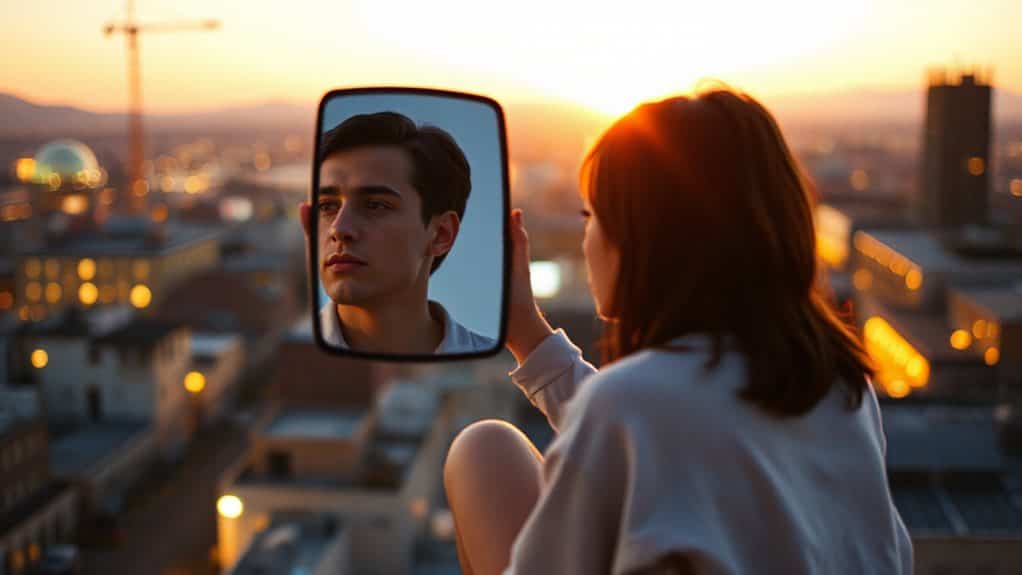
Eye-level positioning and close proximity to dream characters shape how you interact with others in dreams, grounding those encounters in familiar spatial terms.
When you dream in third person, you’re not just watching—you’re reflecting. This outside view reveals your thoughts and actions as objects, creating distance between the experiencing and observing self. It’s a shift from pure feeling to awareness, where you see yourself like someone else, allowing understanding, analysis, and ultimately, communication of what was once unspoken.
How Dream Perspective Affects Self-Location and Identity
While you’re not always aware of it during sleep, the viewpoint from which you experience a dream—whether through your own eyes or as an observer—plays a crucial role in shaping where you feel located in the dream space and how you perceive your identity.
First-person dreams ground you within your body, fostering a direct, multisensory self-location. Third-person dreams shift your self-location outward, often linking to self-objectification and reflective awareness.
This external perspective allows you to see yourself as others might, altering identity expression. Neuroticism and anxiety increase third-person recall, tying emotional processing to how you view yourself in dreams.
Wrapping Up
You might notice your dreams play out like a movie, with you watching yourself from the outside—this third-person viewpoint isn’t rare and often links to traits like anxiety or high neuroticism. It may reflect how your brain processes self-awareness during sleep, distancing you from emotional content. Factors like openness and visuospatial skills also shape how you experience dreams, offering clues about your waking mind’s inner workings.