

Your health line—a diagonal marking running from near your little finger toward your thumb’s base—offers understanding into your constitutional strength, energy resilience, and stress susceptibility, though it never replaces medical evaluation. A deep, clear line suggests strong immunity and quick recovery, while broken or chained patterns may indicate periods of weakness or chronic concerns. Absence of this line often signals naturally sturdy vigor. Intersections with life, head, or heart lines amplify interpretations, and tracking changes over time enhances your wellness awareness when combined with lifestyle observations.
What Is the Health Line and Where to Find It on Your Palm
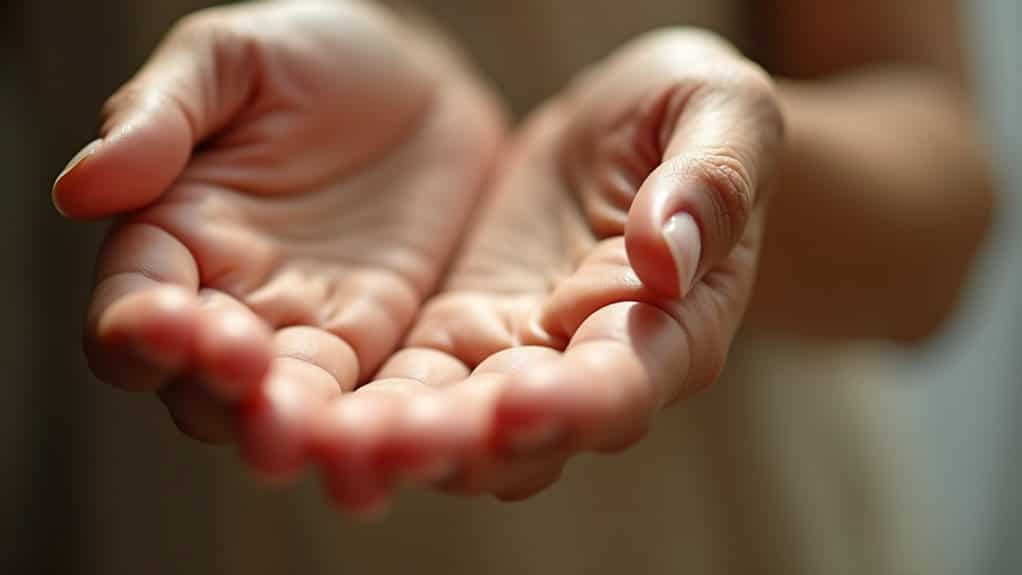
When you look down at your palm, you might notice a diagonal line running from near your little finger toward the base of your thumb—this is the Health Line, also called the Line of Mercury or Hepatica.
It typically begins at the Mount of Mercury and extends diagonally across your palm, sometimes ending near the Mount of Venus or intersecting your Life Line, though its exact path varies between individuals. The location relative to other lines can influence how health signals are interpreted in your reading. Many traditions also link palm-line signs to overall wellbeing and vitality indicators observable in lifestyle and health assessments.
The Meaning Behind a Deep and Clear Health Line
Once you’ve located your Health Line, its appearance tells a specific story about your physical constitution and well-being.
A deep and clear line indicates strong immunity, efficient metabolism, and sturdy physical stamina.
You’ll likely experience consistent energy levels and quick recovery from illness.
This marking suggests balanced lifestyle habits, effective stress management, and a proactive approach to wellness, pointing toward sustained liveliness and longevity.
A deep, wide, and firm Health Line is associated with a robust constitution, reflecting your body’s inherent strength and resilience.
Such markings may also signal incoming opportunities for financial luck that mirror your overall stability and resourcefulness.
Warning Signs: Broken, Chained, and Fragmented Health Lines
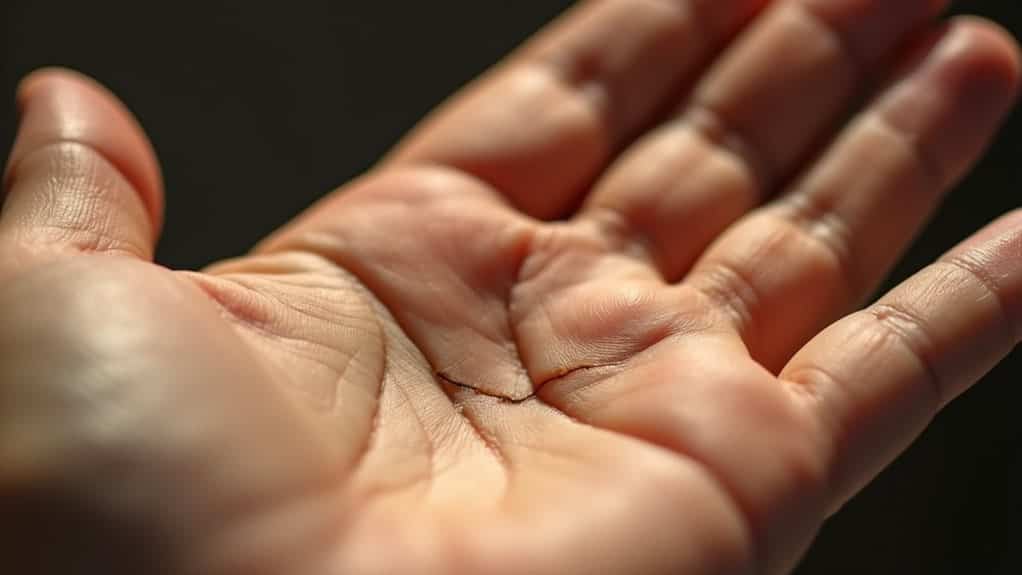
When you notice disruptions along your health line, you’re observing visual markers that palmistry associates with physical vulnerabilities and constitutional weaknesses.
Broken segments typically correspond to periods of illness or declining digestive function, while chained or wavy patterns suggest ongoing struggles with stress, sleep disturbances, or liver-related issues.
These irregular formations don’t predict inevitable disease, but they do highlight areas where your body may require extra attention and preventive care throughout different life stages.
Fire in dreams often signifies inner transformation and personal change, pointing to a need for inner reflection as part of emotional and physical well-being.
Broken Lines Mean Illness
If you’ve noticed breaks, chains, or fragmented sections along your health line, these irregularities typically signal underlying physical vulnerabilities rather than strong vigor.
Broken segments often correlate with digestive disorders, frequent illness, or weakened organ function affecting your liver, kidneys, or bladder.
Multiple short breaks suggest chronic weakness and susceptibility to accidents, while terraced formations indicate worsening health conditions requiring attention.
Chained Patterns Signal Weakness
As you examine your health line for potential warning signs, chained patterns emerge as one of the most significant indicators of chronic physical vulnerability.
These interconnected links typically signal recurring liver or bladder problems, digestive disturbances, and nervous system weakness.
The formation reflects reduced life force, fragile immunity, and difficulty maintaining stable wellness.
Chained segments warn of progressive health decline rather than isolated incidents.
When the Health Line Is Absent: What It Really Means
Contrary to what you might expect, finding no health line on your palm is actually considered excellent news in palmistry.
This absence suggests you’ve been blessed with a naturally sturdy constitution and balanced vigor.
Both Eastern and Western traditions interpret this as indicating strong digestive function, reduced susceptibility to chronic illness, and high energy levels that keep you active and resilient throughout life.
Nails have long been viewed as protective talismans in many traditions, sometimes used to connect power to people and places.
How the Health Line Interacts With Other Major Palm Lines
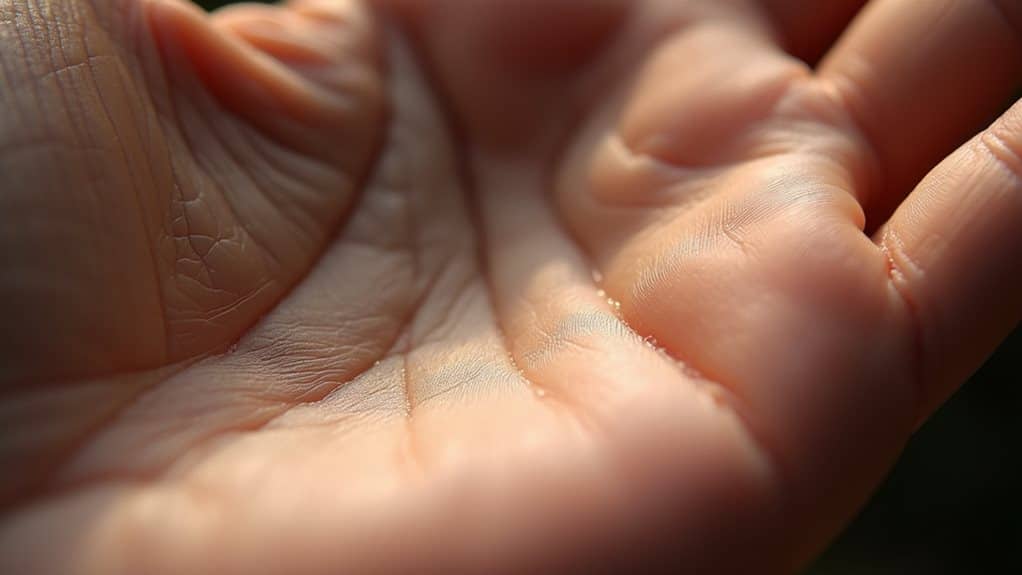
Understanding how the health line interacts with other major palm lines reveals a more complete image of your physical strength and constitution than examining it in isolation.
When it intersects your life line, it suggests vulnerability to health challenges, while crossings with the head line indicate stress-related conditions.
Interactions with the heart line point toward circulatory concerns, and multiple health lines crossing major lines offer subtle understanding into your overall vigor.
Physical Markers That Enhance Health Line Readings
While the health line itself provides useful understanding into your physical constitution, experienced palm readers recognize that fingerprints, skin texture, palm color, and finger characteristics create a thorough diagnostic image that shouldn’t be ignored.
Red, hot palms suggest raised blood pressure, while pale, cold hands indicate anemia. Multiple whorl fingerprints correlate with heart tension, and hyper-flexible thumbs signal paralysis risk. Bluish finger hues warn of cardiac vulnerability, particularly in children.
Historical Roots and Cultural Perspectives on the Health Line
The health line, often called the Mercury line, carries a rich history that spans thousands of years and multiple continents, with its interpretations shaped by diverse cultural lenses.
You’ll find that ancient Indian palmistry texts first documented health-related palm lines over 5,000 years ago, a tradition that later spread to China, Egypt, Greece, and eventually Renaissance Europe, where each culture adapted the readings to fit their medical philosophies.
Understanding these historical roots reveals how different societies—from Chinese practitioners linking the line to liver function, to Ayurvedic scholars viewing it as a dosha indicator—developed unique approaches for interpreting the same physical marker on your palm.
Ancient Palmistry Traditions Worldwide
Across millennia and continents, palmistry has evolved as a complex system for interpreting human destiny and health through the lines etched on our hands.
You’ll find its origins in ancient India around 2000 BC, spreading through Mesopotamia, Egypt, Babylon, and China via trade routes.
Scholars like Aristotle helped establish palmistry in Mediterranean cultures, while each civilization integrated it into their spiritual structures, connecting hand lines to wellness and fate.
Mercury Line Across Cultures
Throughout centuries of palmistry practice, different civilizations have assigned unique meanings to what Western traditions call the Mercury Line or Health Line.
You’ll find Greco-Roman interpretations linked it to physical stamina and business success, while Indian palmistry connected the line to digestive health and mental resilience.
Chinese practitioners viewed it as reflecting your body’s Qi flow, and Persian traditions emphasized its role in predicting disease resistance and stress management capabilities.
Evolution of Health Interpretations
Ancient civilizations didn’t approach the health line with uniform understanding, and their interpretations evolved dramatically as palmistry migrated across continents over five millennia.
Renaissance Europe blended chiromancy with physiological knowledge, mapping palm lines to specific organs like the heart and liver.
You’ll find that medieval suppression pushed practitioners toward naturalistic explanations, while modern interpretations increasingly incorporate psychological perspectives alongside traditional energy assessments.
Specific Health Concerns Associated With Different Line Patterns

While the presence or absence of a health line doesn’t diagnose medical conditions, palmistry traditions have long associated specific line patterns with particular health vulnerabilities.
Wavy lines suggest digestive disturbances, while broken segments indicate chronic complaints or nutrient absorption issues.
Chained patterns point to kidney, liver, or bladder concerns.
Intersections with other major lines, especially the life or heart line, signal constitutional weakness or cardiovascular vulnerabilities worth monitoring.
Using Your Health Line as a Wellness Monitoring Tool
Regularly examining your health line can become a practical component of your personal wellness routine, offering viewpoints that complement—but never replace—conventional health monitoring.
Document its appearance at intervals, noting depth, breaks, or fading patterns. Correlate observations with lifestyle changes, stress levels, and other palm features like your life line. This systematic approach reveals trends, supporting proactive health awareness alongside evidence-based practices.
Wrapping Up
Your health line offers useful observations into your physical vitality, though it shouldn’t replace professional medical advice. By understanding its characteristics—whether deep, broken, or absent—you’ll gain another viewpoint on your wellness patterns. Remember that palm lines can change over time, reflecting shifts in your health and lifestyle choices. Use this knowledge as a complementary tool for self-awareness, not as a definitive diagnosis of your wellbeing.

Seraphina Lumina is a dream interpretation and symbolism researcher with a passion for exploring the connections between dreams, emotions, relationships, spirituality, and personal growth. She draws on traditional dream symbolism, psychological perspectives, and spiritual traditions to help readers make sense of their night-time experiences and the themes that may appear in them.