
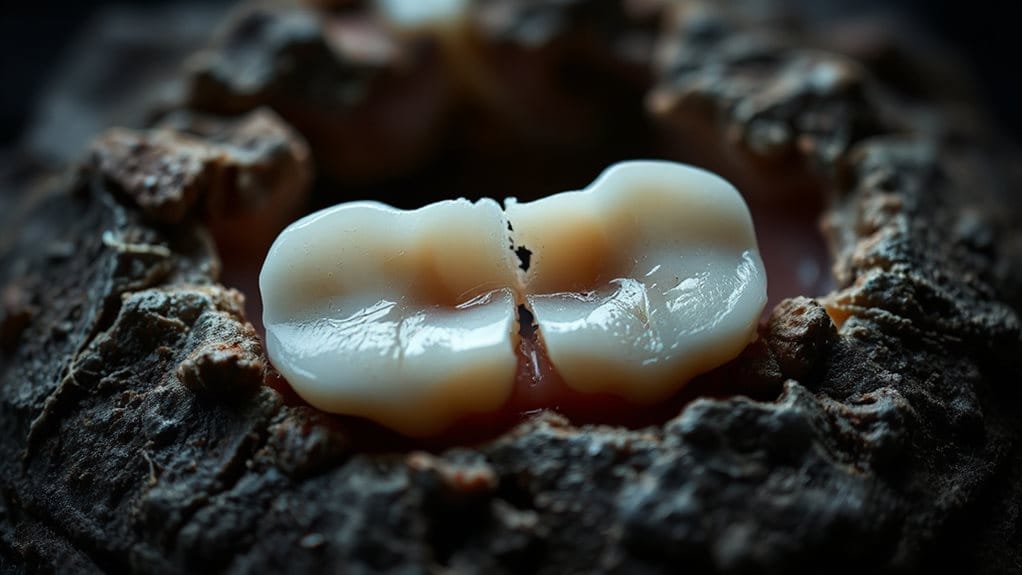
You’re seeing a half‑broken tooth because your mind is flagging a loss of personal power or confidence, often linked to financial stress, aging anxieties, or repressed aggression. The image draws on the symbolism of teeth as tools for biting, defending, and speaking, so breakage suggests diminished assertiveness and fear of losing control. Physical factors like nighttime grinding can amplify the dream, while cultural beliefs tie tooth loss to miscommunication or impending change. Keep tracking your stress triggers and emotions to uncover deeper meaning.
What Does a Teeth‑Breaking Dream Symbolize?

Why does a teeth‑breaking dream feel so unsettling? You sense a sudden loss of power because teeth represent tools for biting, defending, and speaking. When they break, you interpret diminished confidence, anxiety about control, and fear of appearing unattractive. The symbolism also hints at hidden aggression, ego threats, and transitional stress, suggesting deeper emotional imbalance needing attention. This dream often occurs during a period of significant psychological change, signaling that the ego is undergoing a transformative shedding. In some cases, these dreams can mirror the unnerving experience of sleep paralysis, where the mind is awake but the body feels trapped and unresponsive.
How Does Power Anxiety Appear in a Teeth‑Breaking Dream?
How does power anxiety surface when you dream of teeth breaking? You notice the broken teeth as symbols of lost bite and diminished assertiveness, reflecting fears of being unable to defend yourself. The dream mirrors real‑life authority challenges, job transition(s), or financial pressure that erode your sense of control. It also signals repressed aggression and ego threat, suggesting your subconscious processes vulnerability and diminished self‑esteem. In some cases, this kind of dream may overlap with fear processing themes that commonly appear in REM sleep, where emotional material is worked through symbolically rather than acted out in real life.
Why Do Aging Fears Show Up as Broken Teeth?

What makes aging anxieties surface as broken teeth in dreams is the brain’s tendency to translate abstract fears of decline into concrete, familiar symbols. You notice that teeth deterioration mirrors natural aging, so the mind uses broken teeth to signal loss of life force and attractiveness. Cultural universality reinforces this link, while jaw tension during sleep often feeds the imagery, reflecting subconscious distress about physical decline. These dreams also echo broader fears of loss of control and personal change, showing how anxiety about aging overlaps with deeper concerns about stability and power.
How Is Repressed Aggression Reflected in Teeth‑Breaking Dreams?
Do you ever notice that a dream where your teeth shatter feels oddly angry, even if you’re not consciously upset? You may be processing repressed aggression. In Jungian terms, teeth represent instinctual power; breaking signals the shadow’s denied hostility. Freud links the imagery to suppressed anger and castration anxiety. Stress‑induced bruxism can amplify this, turning jaw tension into symbolic tooth loss that mirrors your hidden, aggressive impulses. Just as listening to bird songs can reveal subtle spiritual tensions and unresolved emotions, noticing the intensity and violence in a teeth‑breaking dream can uncover buried anger seeking expression.
What Does Money Worry Look Like in a Teeth‑Breaking Dream?

You might notice that when your teeth shatter in a dream, it often mirrors a deep‑seated fear of losing wealth, as the sudden breakage feels like a financial collapse.
The image of crumbling teeth can also signal anxiety about future security, suggesting you’re worried that your resources won’t hold up under pressure.
In this scenario, the dream reflects financial instability, turning a subconscious concern into a vivid, symbolic warning.
This kind of dream may also reveal an inner clash between your financial fears and your moral constraints, where your conscience symbolically “censors” raw money worries into the dramatic image of teeth breaking.
Financial Instability Reflected
Why does a teeth‑breaking dream feel like a financial alarm? You notice cracked teeth as symbols of weakened power, suggesting you’re struggling to “bite” into opportunities. The breakage mirrors income uncertainty, hinting at reduced agency and confidence. Incomplete chipping signals vague communication about money, while the overall instability reflects broader economic anxiety and a need to rebuild assertiveness.
Fear of Losing Wealth
How does a teeth‑breaking dream translate a worry about losing wealth? You see half‑broken teeth as a metaphor for sudden savings depletion, like a bank account halved overnight. The image suggests irreversible financial damage, echoing fears of bankruptcy or market crashes. It mirrors anxiety over rapid wealth loss, debt pressures, and regrets from poor money choices, warning you of fragile economic stability.
Anxiety Over Future Security
When a teeth‑breaking dream surfaces, it often mirrors the subconscious chatter about future financial security, turning abstract money worries into vivid, tactile imagery. You may interpret crumbling molars as a symbol of looming economic instability, reflecting anxiety over income loss or unpaid bills.
The dream translates pressure from work and debt into a sense of losing control, highlighting hidden fears about long‑term financial reliability.
Which Physical Triggers Can Cause a Teeth‑Breaking Dream?

A teeth‑breaking dream often starts with a physical cue that your brain incorporates into the narrative while you’re asleep. Tension or tingling in your jaw, gums, or teeth—often from nighttime grinding, clenching, or poor oral hygiene—feeds the dream’s imagery.
Stress‑induced bruxism, jaw soreness, or cavity pain can trigger vivid, distorted sensations that manifest as teeth breaking, linking bodily signals directly to dream content.
Cultural and Religious Meanings of Teeth‑Breaking Dreams
You’ll notice that many cultures treat a teeth‑breaking dream as a prophetic omen of death, warning you that an unexpected loss may be near. At the same time, the same image often signals a breakdown in communication, suggesting you’re withholding truth or that others are misreading your words. By comparing these interpretations, you can see how the symbolism intertwines personal power, vulnerability, and the need for clearer expression.
Prophetic Death Omens
Dreams of teeth breaking have long been interpreted as prophetic death omens, weaving together religious doctrine, cultural proverbs, and contemporary spiritual teachings. You’ll find that many faiths link broken‑tooth visions to imminent family loss, while African sayings tie them to premature weakening.
Biblical passages describe God stripping strength, and modern prophets echo this, warning that such dreams foretell regret, decline, and possible bereavement.
Symbolic Communication Loss
When a tooth cracks in a dream, many Western traditions interpret the image as a signal that you’re struggling to convey your thoughts clearly, often fearing that a misstep in speech could damage a relationship or your social standing.
This symbolism links to anxiety about miscommunication, loss of status, and fear of being silenced, reflecting deeper concerns about personal power and social interaction.
Practical Steps to Decode and Ease a Teeth‑Breaking Dream

How can you start turning a vivid teeth‑breaking dream into actionable perspective? Record the date, time, imagery, and emotions each morning, then note recent losses, stress, or financial worries. Sketch broken teeth, link them to power or communication symbols, and journal free associations. Apply Jungian or anxiety frameworks, compare to common meanings, and practice stress‑reduction, self‑esteem exercises, and dental check‑ups.
Wrapping Up
You’ve learned that a teeth‑breaking dream can signal anxiety about control, aging, aggression, finances, or even physical stressors, and its meaning shifts across cultures and personal circumstances. By noting the dream’s details, linking them to current worries, and applying practical coping steps—such as stress‑reduction techniques and health checks—you can clarify the symbolism and lessen its impact. This analytical approach turns a unsettling image into actionable understanding.