
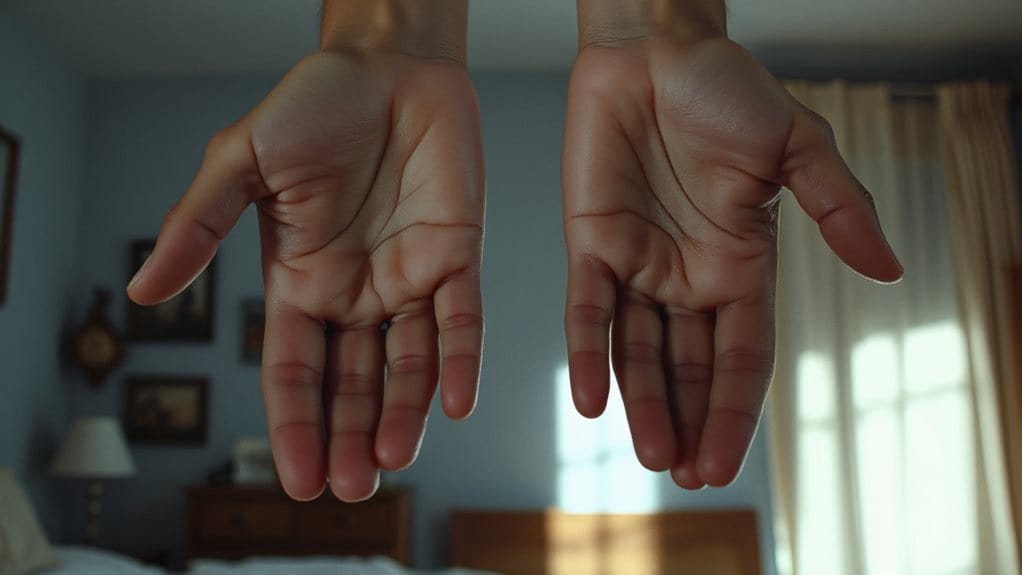
You feel your hands go limp in the dream, unable to move or grasp—this mirrors REM sleep paralysis, where your body naturally shuts down muscle movement. Your brain stays alert, amplifying a sense of helplessness. Motionless hands often symbolize loss of control or unmet responsibilities. Fear and hallucinations may follow, rooted in brain activity during disrupted sleep. The experience reflects both biology and deeper emotional signals worth exploring further.
The Science Behind Sleep Paralysis and Bodily Immobility
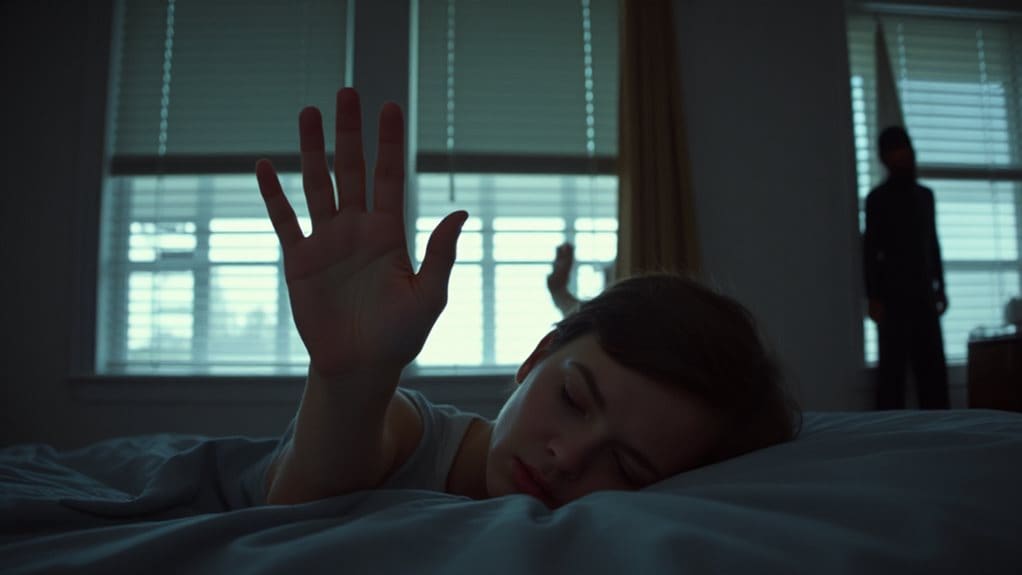
While you’re likely familiar with the occasional stiffness upon waking, true bodily immobility during sleep—especially when paired with vivid hallucinations—is often a sign of sleep paralysis, a phenomenon rooted in the brain’s natural sleep cycles. This experience is influenced by overall sleep quality, which shapes how smoothly your brain transitions in and out of REM sleep.
Your body becomes temporarily paralyzed during REM sleep to prevent acting out dreams, but in sleep paralysis, this atonia spills into wakefulness. You’re conscious yet unable to move, often experiencing pressure, fear, or hallucinations—especially visual or auditory ones—as your brain struggles to interpret a half-dreaming state.
Though unsettling, it’s usually harmless and tied to stress, poor sleep, or mental health factors. This condition is closely linked to REM atonia, a core mechanism in sleep physiology that normally confines muscle paralysis to REM sleep but can intrude into wakefulness during sleep paralysis episodes.
Hands That Fail: Symbolism of Control and Vulnerability
You feel your hands try to move, but they won’t respond—no matter how hard you strain, they remain limp or sluggish, caught in a dream where your body betrays you. This failure symbolizes lost control, often mirroring real-life shifts.
Paralysis during REM sleep disables movement, while heightened fear amplifies helplessness. Your brain, flooded with emotion, overrides motor signals—hands weaken, vulnerability rises, and the mind conjures threats. It’s not magic, just neurology meeting symbolism. In the same way that being unable to find an exit from a building can reflect feeling trapped in waking life, motionless hands in dreams can signal a deeper sense of being stuck or constrained.
When the Mind Awakens but the Body Stays Asleep
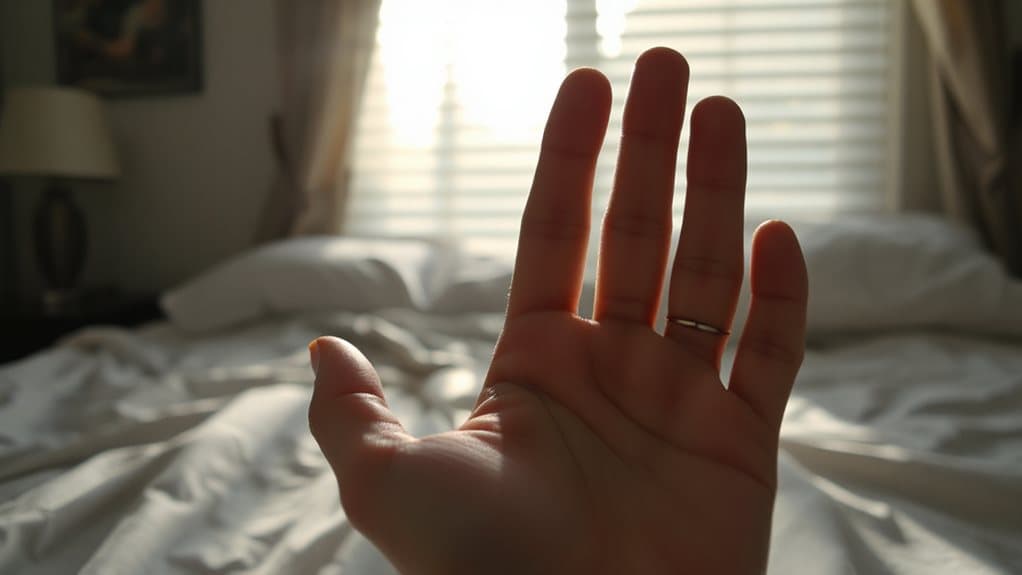
Though your thoughts snap into clarity, your body refuses to follow, frozen in place as if anchored by an invisible force. This is sleep paralysis—your mind wakes during REM sleep, but your muscles remain paralyzed. It’s common, affecting up to 8% of people, and often tied to stress, poor sleep, or anxiety. You’re aware, but temporarily trapped, a glitch in the brain’s sleep-wake switch. In some cases, this trapped sensation overlaps with false awakening loops, where you seem to wake up repeatedly but remain caught in a dream-like state.
Hallucinations and the Mind’s Response to Paralysis
Because your body remains immobilized during sleep paralysis, your brain often tries to make sense of the disconnection between awareness and movement, leading to vivid hallucinations.
You might feel an intruder nearby or pressure on your chest, as the amygdala amplifies fear.
Auditory or visual distortions arise, while floating sensations stem from cerebellar spikes—your brain misinterpreting internal noise as real threats.
In some cases, the brain’s attempt to interpret these sensations overlaps with processes seen in unconscious dreaming, where reduced awareness and altered perception blend into fragmented, hard‑to‑recall experiences.
Transforming Terror: Awareness and Emotional Release
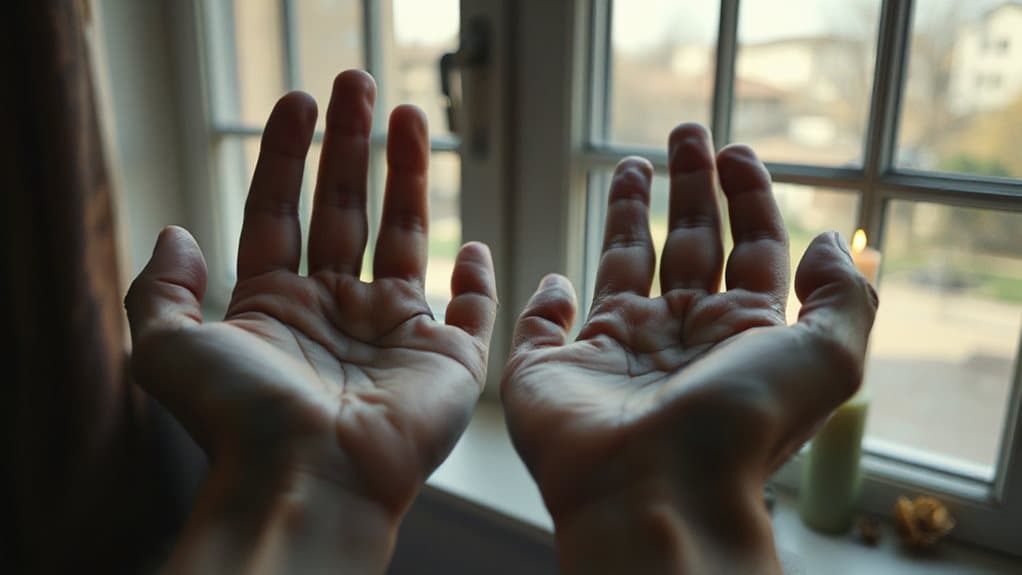
Dreams of immobility or failing limbs often stir deep unease, echoing the paralysis felt during sleep when the mind wakes but the body won’t respond. You can convert this terror through awareness, recognizing such dreams as symbolic messages. They highlight emotional blocks and neglected responsibilities. In many traditions, such dreams mirror a sense of being helpless and stuck, warning of growing inner conflict and urging you to regain self-confidence and confront unresolved issues.
Wrapping Up
You now understand that dreams where your hands don’t work often reflect sleep paralysis, not weakness. Your brain wakes while your body remains immobilized, a natural state preventing movement during REM. This disconnect can spark vivid hallucinations and feelings of helplessness. Yet, recognizing the science behind it reduces fear. Awareness converts these moments from terrifying to informative, offering understanding into your mind’s inner workings—and yes, your hands are fine by morning.

Seraphina Lumina is a dream interpretation and symbolism researcher with a passion for exploring the connections between dreams, emotions, relationships, spirituality, and personal growth. She draws on traditional dream symbolism, psychological perspectives, and spiritual traditions to help readers make sense of their night-time experiences and the themes that may appear in them.
14 thoughts on “Dreams Where Your Hands Don’t Work: Helplessness Symbolism”