
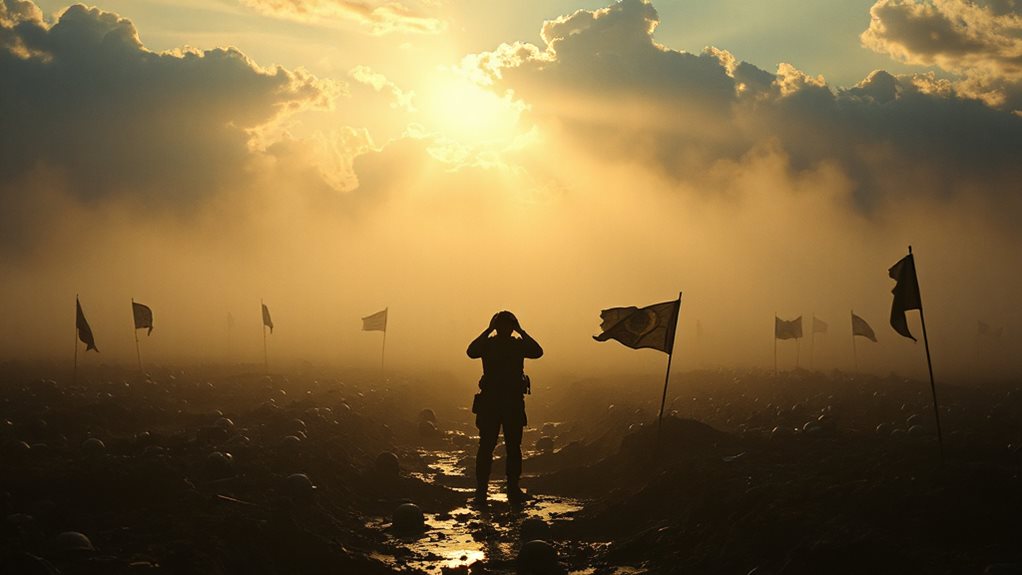
You’re not facing actual combat when war appears in your dreams—it’s your mind processing inner conflict, stress, or unresolved emotions. These dreams often reflect hidden struggles, moral dilemmas, or repressed guilt, using battle imagery to symbolize psychological tension. High stress disrupts sleep cycles, making war scenarios more likely. They may replay trauma, reveal suppressed aggression, or highlight feelings of powerlessness. While not predictive, they offer perspective into your emotional state, and there’s more beneath the surface worth exploring.
What Do War Dreams Reveal About Inner Conflict?

Inner conflict often finds its voice in the silence of sleep, and war dreams serve as one of the mind’s most vivid translators.
You’re confronting unresolved desires or beliefs, turning mental tension into battle scenes. These dreams reveal suppressed turmoil, masked passivity, or neurotic patterns. In many cases, they also echo deeper struggles with moral responsibility and guilt, reflecting how your psyche processes unresolved conflicts and ethical dilemmas.
They don’t predict disaster—they signal inner disharmony, urging self-reflection, emotional regulation, and greater psychological awareness without overwhelming you. Internal conflicts reflected in such dreams often mirror chaotic aspects of waking life, encouraging deeper introspection.
Why Stress Triggers War Dreams (And How to Cope)
When stress builds up, your brain doesn’t just file it away—it often turns it into war scenes while you sleep. High cortisol disrupts REM cycles, and your amygdala activates, simulating threats. Daily tensions replay symbolically, sometimes as repetitive nightmares. Just as dreams of overwhelming emotions like floods can signal rising internal pressure, war dreams may be your mind’s warning that conflict and stress are reaching a breaking point. But you can respond: reframe dreams with imagery rehearsal, regulate sleep, and address triggers. These steps reduce frequency and restore balance, helping you process stress constructively.
Freud’s Theory: What Killing and Dying in War Dreams Mean

Though Freud believed dreams typically disguise unconscious wishes in symbolic form, he found war dreams—especially those involving killing or dying—defied this rule by replaying trauma with startling literalness.
You experience them not as metaphors but raw replays, revealing unprocessed aggression and death drives. These dreams expose pleasure in destruction, survival guilt, and the psyche’s struggle to integrate horror—bypassing symbolism, they force you to confront what words cannot. In this view, war dreams also echo modern understandings of repetition compulsion, where the mind unconsciously re-enacts overwhelming experiences in an attempt to master unresolved trauma.
Common War Dream Scenarios and What They Really Signify
You’re often caught in a battlefield of the mind when war dreams show up, signaling inner struggles you can’t quite escape. These dreams trap you in conflict, whether it’s unresolved emotions, tough decisions, or pressure from others that you’ve been pushing aside. Instead of facing the fight, you might find yourself stuck watching it unfold, revealing how avoidance shapes your waking choices. Much like recurring animal-attack dreams, they often reflect deep-seated fears or unresolved emotional issues that your subconscious is trying to process.
Battlefield Of The Mind
While war dreams may seem to unfold on distant, smoke-choked battlefields, they often map directly onto the conflicts simmering within your mind.
You’re likely wrestling with opposing desires or values—ambition clashing with ethics, or independence warring with security.
These dreams reflect inner turmoil, not literal combat.
Your subconscious uses war imagery to process stress, power struggles, and unresolved emotional battles, revealing how you steer through internal conflict.
Trapped In Conflict
Caught in the crossfire of a dream war, you’re often not fighting an enemy but a deeper sense of being stuck—unable to escape a situation that feels beyond your control.
You might avoid confrontation or suppress emotions, letting tension build.
These dreams highlight inner conflict, signaling unresolved issues or anxiety.
They urge you to pause, reflect, and address what’s really burdening you.
How War Dreams Help You Release Repressed Emotions
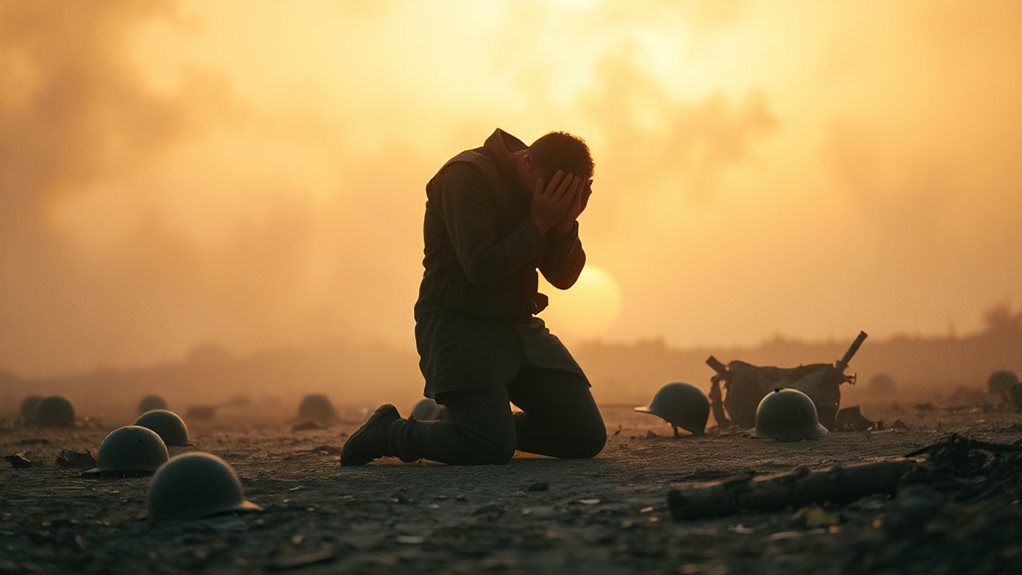
Because your mind often processes unresolved distress during sleep, war dreams can act as a psychological outlet for emotions buried too deep for daily awareness. You’re not just reliving trauma—you’re rehearsing responses, integrating memories, and releasing stored fear or guilt. These dreams reflect real emotional residue, helping you gradually process what once overwhelmed your system, even decades later. Similar to torture dreams, war dreams can symbolically surface unresolved issues and strong inner conflict, giving you a safe mental space to examine and begin healing them.
Can War Dreams Predict Real-Life Change?
If your dreams feature soldiers marching through familiar streets or sudden explosions in quiet towns, you might wonder whether these visions signal something bigger than your own mind at work.
While some historical patterns link war dreams to societal unrest, research shows most reflect personal stress, not prophecy.
Only a small fraction connect to real events, suggesting your subconscious mirrors inner conflicts more than predicts global change.
Wrapping Up
You now see war dreams as more than chaos—they reflect inner conflict, stress, and repressed emotions. These visions often mirror real-life struggles, not future events. Freud’s understandings link death or killing in dreams to transformation, not literal harm. By analyzing scenarios, you gain self-awareness. You cope better when you recognize emotional patterns. War dreams don’t predict battles; they help resolve them internally, quietly, over time.