

You’re not lost when you dream of deserts—you’re confronting emotional dryness and inner emptiness. These dreams often reflect isolation, not as loneliness, but as a call for introspection and self-reliance. You may be facing psychological challenges, processing anxiety or exhaustion, while your mind signals the need for renewal. Jung saw this as integration; Freud, as rebellion. The desert strips away distractions, offering clarity. There’s meaning in the stillness, and your passage through it reveals more than you think.
What Does Your Desert Dream Mean?
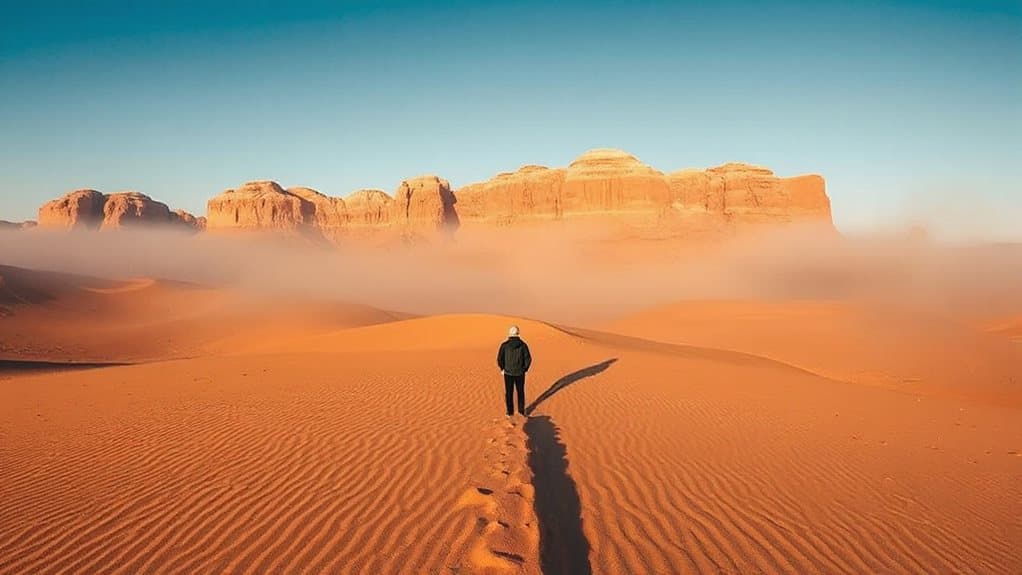
What might it mean when you find yourself wandering a vast, sunbaked desert in your dreams? It often reflects stagnation or emotional dryness, signaling a need for change. Similar to how dream imagery of hidden anxieties surfaces through small, persistent symbols, a barren desert landscape can point to underlying worries that have quietly built up over time.
You may feel lost or isolated, craving direction. Yet deserts also invite deep self-reflection.
They can represent spiritual testing, urging patience and inner work before renewal arrives, much like biblical wilderness odysseys. Sand’s role as a symbol of transitory time adds depth to this journey, reminding us that even periods of emptiness are temporary and part of a larger cycle.
Are You Feeling Alone in Your Dream?
You’re not always lost when you find yourself alone in a desert dream—sometimes, you’re simply being asked to pay attention.
This solitude often reflects emotional independence or a need for introspection.
It may stem from life changes, unresolved fears of rejection, or the mind’s effort to process social disconnection.
Alone doesn’t always mean lonely—it can signal growth.
In many symbolic traditions, this kind of solitude also echoes the way dreams of unresolved issues and imbalance encourage you to reassess where your energy is going and what truly needs to be healed.
Is Your Mind Emotionally Drained?
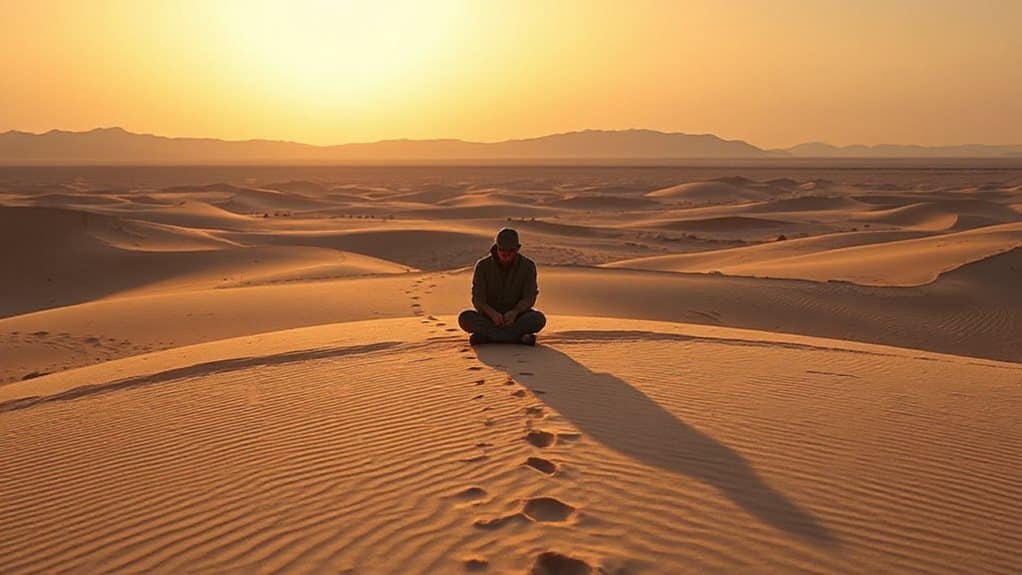
While wandering through a desert in your dream, you mightn’t just be facing isolation—your mind could be signaling deeper emotional fatigue. You may feel anxiety, hopelessness, or powerlessness, often tied to emotional exhaustion.
Physical signs like fatigue, poor sleep, and muscle tension mirror your mental state. These symptoms, paired with declining performance, suggest burnout. Recognizing them helps you address the root causes before they deepen. Much like dreams of overwhelming floods, desert dreams can be your mind’s way of processing intense emotions and warning you about approaching psychological strain.
Are Desert Dreams a Sign of Crisis?
You might be facing inner turmoil if your dreams feature endless dunes and scorching sun, as these images often reflect emotional depletion or a struggle for survival. Such dreams can serve as a call for self-discovery, inviting you to confront neglected parts of yourself in the silence of the wasteland. Rather than just a crisis, this arid space may mark the threshold of metamorphosis, where old layers burn off and growth begins. Much like beach dreams that reveal your emotional landscape through waves, crowds, or isolation, desert dreams can expose where you feel barren, overextended, or in urgent need of inner renewal.
Signs Of Inner Turmoil
When desert scenes dominate your dreams, they often signal more than just a subconscious trip to a sunbaked wasteland—they can reveal deep-seated emotional strain.
You might feel isolated, drained, or stuck in a barren phase of life.
Parched terrains mirror inner emptiness, while searching for water reflects a quest for fulfillment.
These symbols suggest suppressed struggles, urging you to confront neglected parts of yourself before they escalate.
Call For Self Discovery
A quiet reckoning often unfolds within the stark silence of desert dreams, where vast emptiness isn’t just a backdrop but a mirror.
You’re prompted to confront what’s hidden, as isolation strips away distractions.
These dreams aren’t just crises—they’re invitations.
You begin seeing them as chances to reflect, grow, and rediscover purpose amid the barren, turning inward to find meaning where you once saw only loss.
Threshold Of Transformation
Though they may feel unsettling, desert dreams often mark not a breakdown but a breakthrough—an entry into the psyche’s uncharted terrain. You’re crossing a threshold where ego meets unconscious, sparking metamorphosis.
These arid visions reflect inner splits, yet fertile change follows. Balance is key: engage fears without merging with them. Dreams guide you through crisis, revealing paths to renewal, integration, and deeper awareness of self and world.
Why Do Desert Dreams Bring Clarity?
Because the desert strips away distractions, you’re left with nothing but your thoughts, and that’s where clarity begins. You process emotions directly, sharpening self-awareness.
Natural quiet supports mindfulness, while reduced cortisol lowers stress. Sensory focus grounds you, restoring mental energy.
Awe and solitude spark reflection, improving emotional resilience—conditions that not only clarify waking thought but also shape calmer, more positive dreams. In this stripped-down mental space, your mind can surface buried feelings much like cemetery dream symbolism, turning inner stillness into a powerful catalyst for emotional healing and personal growth.
What Jung and Freud Say About Desert Dreams
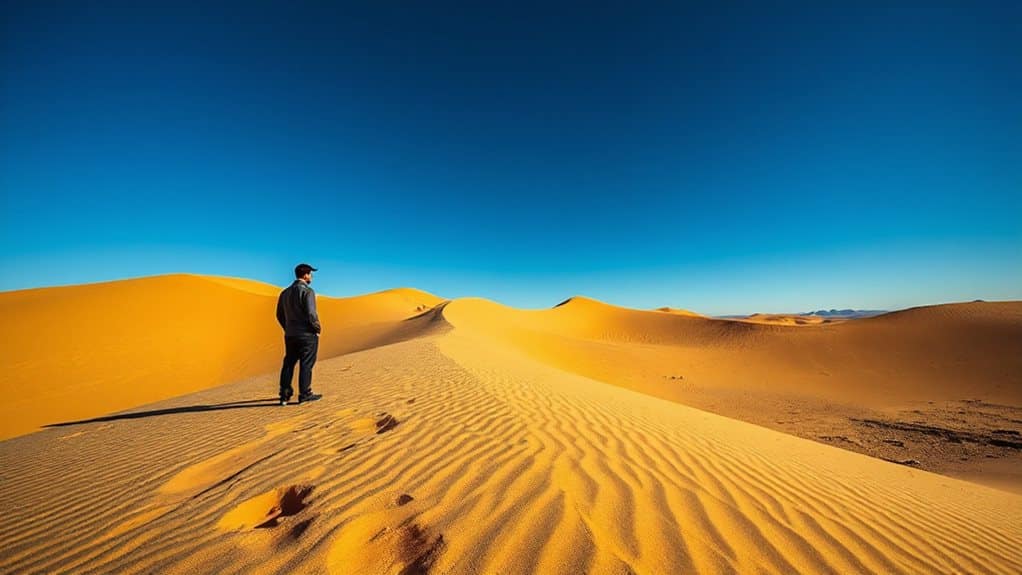
You’ll find Jung sees the desert as a mirror of your inner emptiness, where neglected parts of the self surface during the passage toward wholeness.
He links it to deep metamorphosis, like the alchemical stage where decay precedes renewal, urging you to face what’s buried. Freud, on the other hand, views your desert dream as a quiet rebellion—a craving for freedom or escape, especially when emotional needs feel dried up or society’s demands weigh too heavy.
Jung On Desert Symbolism
The desert in Jungian dream symbolism carries a deep psychological weight, representing far more than mere emptiness.
You confront your shadow self here, facing repressed fears or desires hidden beneath daily awareness. It reflects isolation, yes, but also metamorphosis—where silence and hardship pave the way for self-discovery.
Through dreams, the desert bridges conscious and unconscious, urging integration, growth, and a deeper understanding of your inner world.
Freud’s Escape Interpretation
While Jung saw the desert as a cauldron for inner metamorphosis, Freud would likely interpret your desert dream as an escape hatch from repression, a symbolic flight from the demands pressing on you awake.
You’re seeking freedom, not change. The barren scenery reflects your unconscious craving to break from societal norms. It’s less about growth, more about release—your mind’s way of granting wishes too dangerous to fulfill in real life.
How Desert Dreams Lead to Personal Growth
Because desert dreams often mirror the mind’s uncharted terrain, they invite you to engage with parts of yourself that have been ignored or suppressed.
You confront inner barrenness, not to suffer, but to adapt and grow.
Through introspection and symbolic awareness, you convert isolation into understanding, letting the psyche’s dryness give way to renewed creativity and emotional depth.
Spiritual Meaning of Desert Dreams
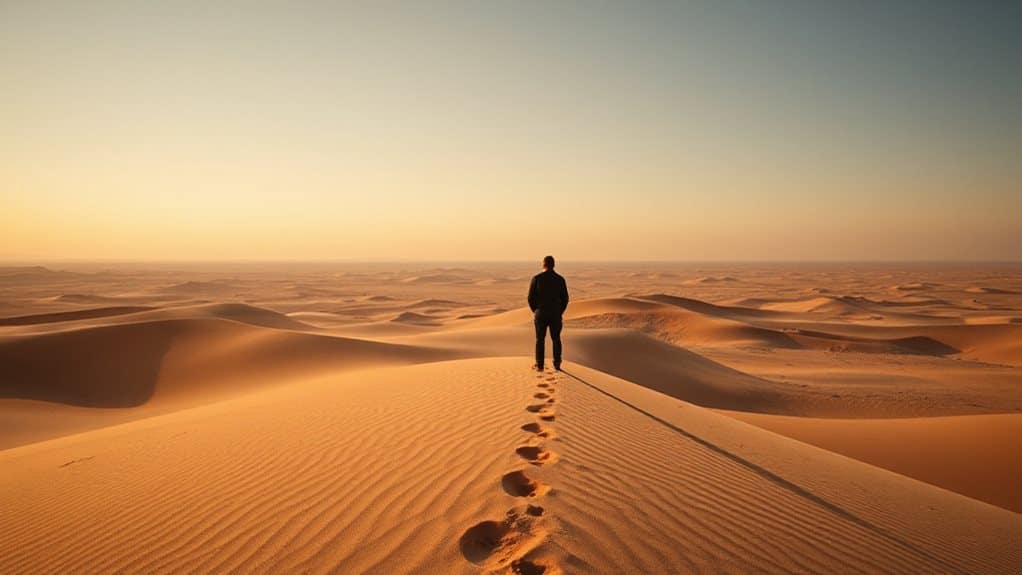
When you dream of deserts, you’re often stepping into a symbolic terrain shaped by spiritual testing and inner change.
You may feel dry or isolated, yet this space isn’t empty—it’s where faith deepens and distractions fade.
Such dreams reflect consecration, refinement, and preparation.
You’re being shaped, tested, and led toward clarity, often before a greater purpose unfolds.
Emptiness becomes potential.
Wrapping Up
You often face isolation and challenge in desert dreams, reflecting inner emotional strain or life changes. These dreams don’t signal crisis but invite personal reflection and growth. Jung saw them as paths to the unconscious, while Freud linked them to repressed feelings. Spiritually, they represent purification. You gain clarity by confronting what the desert reveals, turning emptiness into understanding. Such dreams aren’t warnings—they’re invitations to look deeper.

Seraphina Lumina is a dream interpretation and symbolism researcher with a passion for exploring the connections between dreams, emotions, relationships, spirituality, and personal growth. She draws on traditional dream symbolism, psychological perspectives, and spiritual traditions to help readers make sense of their night-time experiences and the themes that may appear in them.