

You’re not dangerous when you dream about killing someone—your mind is using intense imagery to process repressed anger, guilt, or inner conflict. These dreams often reflect unresolved emotional tension, not violent urges. Your brain turns psychological struggles into symbolic scenarios, helping you cope with stress, shame, or moral dilemmas. High emotion during REM sleep makes the experience feel real. Such dreams reveal more about your internal world than external risks, especially when patterns repeat. There’s more beneath the surface worth exploring.
What Your Killing Dreams Reveal About Hidden Emotions

While your dreams may feel disturbingly real, they often serve as symbolic reflections of inner emotional states rather than literal desires. In the same way that torture imagery can symbolize inner conflict and stress in dreams, killing scenarios often dramatize intense psychological tension seeking release.
You might be processing repressed anger or unresolved resentment toward someone in your life. These violent scenarios allow your unconscious mind to express hidden emotions safely.
Dreaming of killing can reveal deeper conflicts, unacknowledged guilt, or fears of exposure, offering perspective into emotional tensions you’ve yet to confront.
This type of dream content often arises because the mind prioritizes emotional expression over logical coherence during sleep, allowing intense feelings to surface in symbolic form emotional essence of experiences occupies most cognitive resources in dreams.
Why Your Brain Uses Killing as a Metaphor
You mightn’t realize it, but your brain often leans on vivid metaphors like killing to make sense of complex emotional conflicts, drawing on deep neural pathways that blur the line between literal and symbolic action. It activates sensory and motor regions within milliseconds, treating metaphors as physical experiences. This helps explain why imagined acts feel real—they’re processed as survival-level threats, not just thoughts. In this way, killing imagery can act as a symbolic form of emotional catharsis, allowing your mind to safely process suppressed anger, guilt, or power struggles through intense but metaphorical violence.
Killing Dreams and Real-Life Aggression: What’s the Connection?

You might dream about killing someone and wonder if it means you’re more aggressive in real life—research suggests there’s often a link. People who’ve these dreams tend to score higher on traits like hostility, introversion, and psychopathy, which also correlate with waking aggression. While dreams don’t cause violent behavior, they seem to mirror underlying emotions and personality patterns you’re already experiencing. In many cases, these dreams also point to repressed anger or simmering resentment that needs a healthier outlet in your waking life.
Dreams Reflect Waking Aggression
Often, dreams of killing aren’t just random nightmares—they reflect deeper patterns in how you handle aggression while awake. If you dream of killing, you may score higher in hostility and lower in agreeableness.
Introverts might suppress anger daily, letting it surface in dreams. These dreams often exaggerate real emotions, acting as a mirror to unresolved inner conflict.
Personality Traits Influence Dreams
While dreams of killing may seem alarming, they’re often less about literal violence and more about the mind’s way of processing underlying personality traits.
You might dream aggressively because traits like psychopathy or Machiavellianism shape your inner world. These traits correlate with more violent, sexual, or impulsive dream content—reflecting real behavioral patterns, not just random nighttime stories.
Emotions Mirror Inner Conflicts
Underlying aggression in dreams often acts as a mirror, reflecting unresolved tensions rather than predicting violent behavior. You may dream of killing someone not because you’re dangerous, but because you’re wrestling with inner conflict, stress, or repressed emotions.
These dreams often link to waking hostility, poor relationships, or psychological strain—especially if you’re introverted or struggling with depression, PTSD, or rumination.
Repressed Anger and Your Violent Dreams
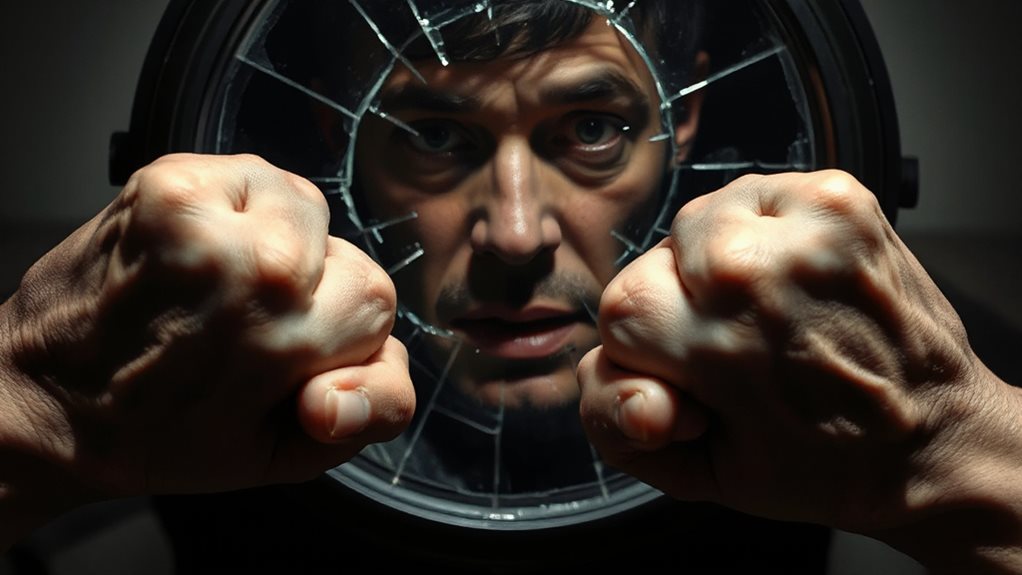
Unresolved anger doesn’t vanish—it simmers beneath the surface, shaping your inner world in ways you mightn’t immediately recognize. You suppress anger to avoid conflict, but it doesn’t disappear; it changes form. Your violent dreams act as pressure valves, revealing repressed hostility through aggressive imagery. These dreams aren’t literal, but symbolic, reflecting inner tension and unmet emotional needs needing acknowledgment and release. In many cases, violent dream scenarios function as a form of emotional release, allowing your subconscious to safely process unresolved conflicts and hidden tension that you struggle to express while awake.
When Daytime Conflicts Turn Violent at Night
You carry your daily struggles to bed with you, often without realizing it. Stress, anxiety, or unresolved conflicts can fuel violent dreams, especially after consuming aggressive media near bedtime. External triggers like a partner’s touch may spark unconscious aggression. Trauma or political turmoil can also seep into sleep, turning inner tension into nighttime violence, often linked to disorders like sleepwalking or PTSD-related nightmares. Similar to dreams of wild animal attacks, these violent scenarios can act as the mind’s way of processing deep-seated fears and unresolved emotional conflicts.
Why Dream Emotions Feel So Overwhelming

You’ve probably noticed how dreams pack an emotional punch, making fear or anger feel more intense than in waking life. That overwhelming feeling isn’t just in your head—it’s tied to how your brain processes unresolved conflicts while you sleep, often amplifying emotions to signal something important.
Since dreaming prioritizes emotional memories, especially negative ones, your subconscious isn’t just replaying the day; it’s working through it with heightened stakes.
Heightened Emotional Intensity
Because your brain’s emotional centers rev up during REM sleep, dreams often feel far more intense than everyday memories.
Your amygdala fires strongly, amplifying emotions like fear or joy. Even neutral events gain emotional weight. Gamma and theta brainwave coupling enhances this effect.
Chronic stress worsens it, making dreams overwhelming. This intensity helps process emotions, but in disorders like insomnia or depression, it can spiral, turning dreams into emotionally charged experiences that linger after waking.
Subconscious Conflict Signals
The intensity of emotions in dreams isn’t just random noise—it often points to deeper currents beneath your awareness. Your subconscious uses vivid scenarios, like killing someone, to signal inner conflicts or repressed emotions. These dreams reflect unresolved tensions, not literal desires.
Through symbolic narratives, your mind processes hidden anxieties, urging attention. It’s less about violence, more about confronting what you’ve buried.
Killing Dreams and Personality: Introversion, Low Agreeableness
Dreams about killing someone aren’t just random flashes of violence—they often reflect underlying personality traits, especially introversion and low agreeableness.
You might bottle up aggression during the day, and it bursts out in dreams.
If you’re less agreeable, hostility in waking life spills into sleep.
Studies link these dreams to real-life traits, suggesting your mind processes suppressed emotions through intense dream scenarios.
Guilt in Dreams: Fear of Getting Caught, Not Morality

Facing the aftermath of a violent act in your dream, you’re more likely to feel the cold grip of fear than a pang of moral regret. Your brain isn’t balancing ethics—it’s rehearsing survival.
Guilt in dreams often centers on being caught, not wrongdoing. This fear-driven response mirrors real threat processing, with your amygdala activating as if danger were real, turning suppressed anxiety into a nighttime alarm.
Did You Help in a Dream Killing? What It Means
While you mightn’t be the one wielding the weapon, helping in a dream killing still places you at the center of a moral storm your subconscious is trying to steer through.
You’re likely struggling with guilt over supporting questionable choices, possibly in a relationship. Your dream reflects repressed anger, fear of exposure, or complicity in actions that clash with your values, urging you to confront buried emotions and reassess alliances.
What Shame in Your Dreams Reveals

Shame in your dreams often acts as a mirror, reflecting the quiet tension between who you’re and who you think you should be.
It reveals hidden insecurities, societal pressures, or moral conflicts buried in your psyche. You might fear exposure, judgment, or not measuring up.
These dreams highlight unresolved guilt, repressed aspects of your shadow, or internalized standards demanding perfection—even when you’re only human.
Reflect Safely on Aggressive Emotions
Feeling anger doesn’t make you dangerous—how you handle it does. You can acknowledge aggressive emotions safely through reflection, not reaction.
Your body’s stress response is real, but you can manage it with exercise, therapy, or mindful breaks. Recognize warning signs—racing thoughts, tension—then pause.
Channel feelings constructively, like asserting boundaries, not exploding. Understanding your mind’s patterns helps you respond with control, not fear.
When to Talk to a Therapist About Recurring Killing Dreams

If your nightmares about killing someone happen often and leave you drained or anxious during the day, it’s a sign they’re affecting your well-being.
When these dreams tie into deeper emotional distress, like unresolved guilt or fear of losing control, they might reflect inner conflicts needing attention.
Talking to a therapist can help you make sense of these feelings and reduce their hold on your life.
Frequent Nightmares Affecting Daily Life
You’re not alone if you’ve been having recurring dreams about killing someone, especially if they’re happening often enough to disrupt your sleep or mood.
Frequent nightmares affect 3–7% of people, rising to 11% during stress-heavy periods like the pandemic.
If nightmares impair your daily functioning, consider speaking with a therapist—especially since they’re linked to higher risks of anxiety, depression, and suicidal thoughts.
Dreams Linked To Emotional Distress
While dreams of killing someone might seem alarming, they often stem from underlying emotional distress rather than literal desires. You may be processing inner conflict, guilt, or unresolved fears. If these dreams trigger guilt, rumination, or fear of the future, consider speaking with a therapist.
Recurring violent dreams can reflect emotional processing failures, especially when tied to trauma, depression, or anxiety—professional support helps restore balance.
Unresolved Guilt Seeking Professional Insight
Unresolved guilt often surfaces in dreams not as a clear confession, but as a symbolic replay of inner turmoil, especially when the mind revisits acts like killing in sleep.
You might dwell on these dreams past morning, seeking hidden meanings or fearing moral failure.
If guilt lingers, disrupts sleep, or triggers compulsive analysis, it’s time to talk to a therapist.
These patterns often reflect deeper conflicts, not violence, and professional perspective can help you process what your subconscious struggles to release.
Wrapping Up
You might feel unsettled by dreams of killing, but they rarely reflect actual violent intent. Instead, your brain uses intense imagery to process repressed anger, unresolved conflict, or emotional suppression. These dreams often emerge when you’re avoiding confrontation or struggling with guilt. Recognizing them as symbolic, not literal, helps you address underlying stress. If they persist, talking to a therapist offers clarity—because understanding your mind is more useful than fearing it.