

You’re awake but can’t move, caught in a split-second where your brain wakes faster than your body, leaving you aware during sleep paralysis. Fear spikes as dream fragments invade, fueled by an overactive amygdala and disrupted REM cycles. Hallucinations feel real because your senses blur, misreading internal signals as threats. Stress, poor sleep, or underlying conditions like PTSD raise your risk. Though brief, these episodes reveal how deeply your subconscious shapes nighttime experiences—and what they say about your mind’s boundaries might surprise you.
What Is Sleep Paralysis? The Science of Waking Up Unable to Move

While you’re drifting off or coming back to consciousness, your brain can sometimes wake up before your body does—leaving you aware but unable to move or speak.
This happens when REM sleep paralysis lingers, blocking muscle signals despite your alert mind.
You’re not dreaming—it’s a glitch in sleep-wake timing.
Breathing and eye movement stay intact, and episodes pass quickly, usually in under a few minutes.
This phenomenon is classified as a parasomnia, and affects approximately 7.6% of people at some point in their lives. In some cases, people also experience vivid hallucinations or feel trapped in a mixed awareness state where elements of dreaming and wakefulness overlap.
Why Does Sleep Paralysis Feel So Terrifying? Brain, Fear, and Hallucinations
You’re awake, but your brain is still caught in REM sleep, leaving you paralyzed while fear centers like the amygdala go into overdrive.
Your senses distort as dream fragments bleed into reality, making it hard to tell what’s real and what’s not.
This mix of helplessness, hyperactive threat detection, and blurred consciousness is why the experience feels so deeply unsettling.
During this state, REM paralysis disrupts normal motor and sensory feedback, so actions like moving or fighting can feel impossibly slow, weak, or completely out of your control.
Limbic Hyperactivation And Fear
Because your brain remains in a heightened state of emotional processing during sleep paralysis, the experience often feels intensely threatening, even when you’re physically safe.
Your amygdala and insula overactivate, amplifying fear through emotional and bodily signals. Serotonin surges via 5-HT2A receptors enhance limbic activity, while disrupted REM shifts trap you in a vivid, fearful limbo between sleep and wakefulness.
Sensory Distortions During Paralysis
When your body shuts down muscle movement during REM sleep to prevent acting out dreams, your brain doesn’t always realize it’s supposed to stay offline—so when you become conscious while still paralyzed, sensory distortions kick in fast.
You feel pressure, hear sounds, or sense threats because your brain misinterprets internal noise as real danger, especially with impaired prefrontal control and heightened fear circuits amplifying every ambiguous signal.
REM Intrusion Into Wakefulness
Sleep paralysis doesn’t just trap your body—it hijacks your senses and fear circuits by letting REM sleep bleed into wakefulness. Your brain stays active, eyes dart, and dreams spill into reality.
PGO spikes and cholinergic surges spark hallucinations, while amygdala activation fuels fear. Muscle atonia persists, trapping you.
This intrusion, seen in narcolepsy or high-stress states, blurs sleep-wake boundaries, making the unreal feel dangerously close.
When REM Sleep Intrudes: The Sleep Cycle Connection
Although your body typically cycles smoothly between sleep stages, disruptions can blur the boundaries between dreaming and waking—especially during REM sleep.
You enter REM about 90 minutes after falling asleep, cycling every 90–110 minutes.
As REM lengthens later in the night, your brain’s vivid dreams and muscle atonia may persist briefly upon waking, creating a temporary, conscious paralysis rooted in misaligned sleep structure. Sleep disorders such as insomnia or sleep apnea can fragment rest, reducing REM duration and increasing the chances that this paralysis is experienced or remembered.
Who Gets Sleep Paralysis? Prevalence, Triggers, and Risk Factors

You’re not alone if you’ve ever woken up unable to move, caught in a liminal space where dreams haven’t fully released their hold.
Around 8% of people experience sleep paralysis, though rates vary globally. Students, psychiatric patients, and those with narcolepsy or PTSD face higher risks.
Irregular sleep, stress, and genetics also play roles—your habits and biology can shape your vulnerability. In some people, sleep paralysis overlaps with disturbing imagery like recurring torture dreams, suggesting the brain is surfacing unresolved stress or emotional conflict during these episodes.
How to Stop Sleep Paralysis: Prevention and Coping Strategies
When it comes to reducing the frequency or intensity of sleep paralysis, taking proactive steps can make a meaningful difference. You can improve sleep hygiene by aiming for 7–9 hours, keeping consistent sleep times, and avoiding screens before bed. Since episodes of sleep paralysis and fainting can both involve temporary changes in consciousness, learning about warning signs such as lightheadedness and blurred vision may help you recognize when your body is under stress. Practice relaxation techniques, adjust lifestyle factors like caffeine and exercise, and address underlying conditions. During episodes, focus on small movements and calm breathing to regain control.
Could Sleep Paralysis Be a Warning Sign? When to Seek Help
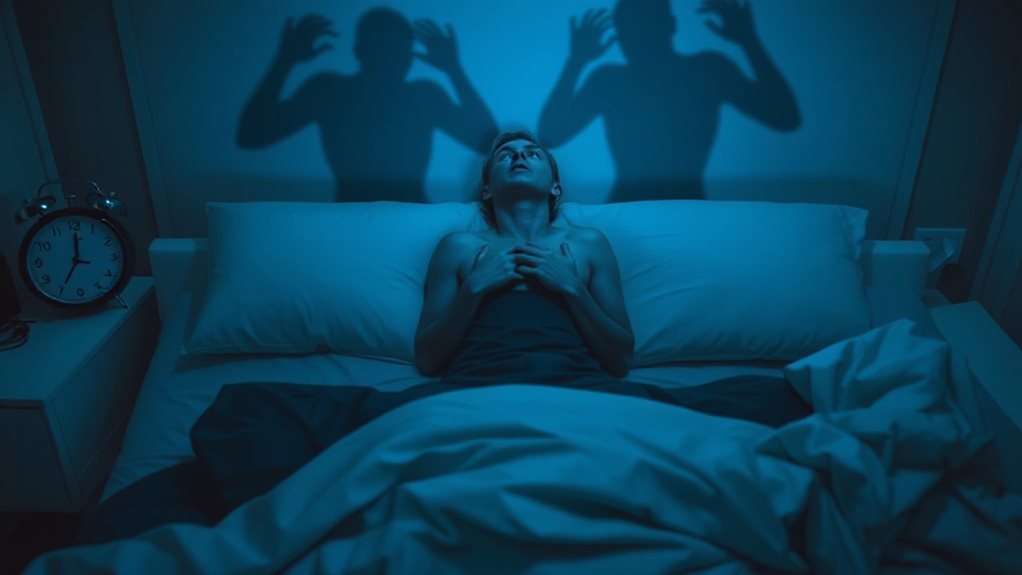
You mightn’t realize it, but frequent sleep paralysis episodes can signal an underlying issue like narcolepsy or PTSD, especially if they disrupt your daily routine.
When fear of sleeping or lingering anxiety starts affecting your focus, mood, or energy, it’s a sign your body’s sending a stronger message than just a one-off scare.
If episodes come with chronic fatigue, headaches, or you’re avoiding sleep altogether, it’s time to get a medical check-up.
Frequent Episodes Warrant Evaluation
Occasionally, sleep paralysis is nothing more than a startling but harmless glitch in the sleep-wake cycle—yet when episodes become frequent or disruptive, they demand closer attention.
If you’re experiencing multiple episodes within six months, especially with daytime fatigue or anxiety around sleep, evaluation is wise. These patterns can signal underlying conditions like narcolepsy or sleep apnea, so don’t dismiss them. A check-up helps rule out serious causes and guides effective management.
Underlying Disorders May Contribute
Though sleep paralysis often feels like a fleeting and isolated oddity, it can sometimes signal deeper underlying disorders—making it worth considering what else might be going on beneath the surface.
You might’ve narcolepsy, especially if cataplexy or excessive daytime sleepiness appears. Psychiatric conditions like PTSD or anxiety, sleep apnea, or circadian disruptions could also play a role.
Genetic predispositions or familial patterns may increase your risk, so don’t ignore recurring episodes.
When Fear Impairs Daily Life
Sleep paralysis isn’t always a one-off scare—when fear starts shaping your nights and spilling into your days, it may be more than just a strange episode.
You might avoid sleep, feel irritable, or struggle to focus. Fear fuels more episodes, creating a loop.
If this cycle disrupts your life, it’s time to act—your well-being depends on it.
Wrapping Up
You now understand sleep paralysis isn’t supernatural, but a glitch in your sleep cycle, often tied to stress or irregular sleep. Your brain wakes while your body remains in REM-induced paralysis, sometimes causing vivid, unsettling hallucinations. Though frightening, it’s usually harmless and manageable. You can reduce episodes with better sleep habits and stress control. If it persists or causes anxiety, you should consult a professional—because clarity, not fear, helps you regain control.