

You might dream of tsunamis when stress or loss triggers memories tied to overwhelming change. These dreams often reflect sudden life shifts, much like the trauma survivors face after disasters. Grief, instability, or major shifts can reignite dormant fears, making emotions feel like a rising wave. Sleep disruptions increase how often you recall such dreams. They’re not just random—they symbolize unresolved turmoil. Your mind uses them to process what words can’t. Patterns in trauma show these experiences are more common than you think.
What Triggers Tsunami-Related Trauma Dreams?
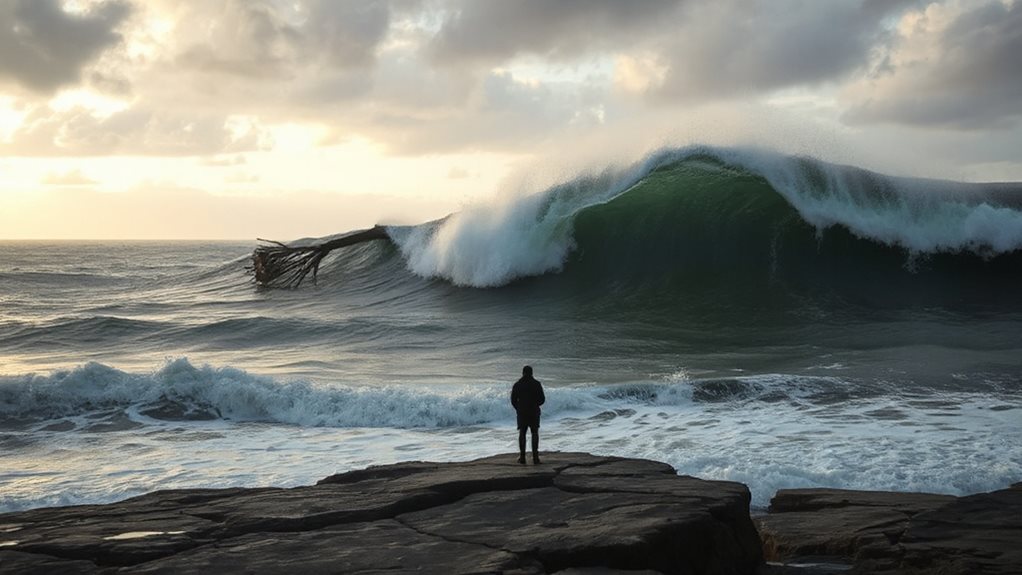
While you might expect only those who’ve lived through a tsunami to dream about one, trauma-related nightmares can emerge even without direct exposure. Similar to dreams of flood outside house, they often symbolize emotions rising quickly and a fear of being overwhelmed by approaching life events.
You may experience these dreams due to intense media coverage, accumulated grief, or hyperarousal. Cues like sounds or images trigger stress, while sleep disruptions increase vivid dream recall. Even secondary exposure can activate implicit memories, leading to recurring, distressing dream content linked to trauma. These dreams often reflect overwhelming emotions stemming from stressors in waking life, such as unresolved anxiety or major life changes, and can serve as a subconscious signal that emotional processing is needed (overwhelming emotions).
Why Do PTSD Symptoms Resurface Years Later?
You might notice old PTSD symptoms coming back when life throws you a curveball, like a major loss or a stressful change, even decades later.
Unresolved grief can simmer beneath the surface, and over time, it quietly fuels emotional reactions that feel surprisingly intense.
These resurgences aren’t random—they often tie back to how your brain has adapted, or struggled, in the aftermath of trauma.
Sometimes these returning symptoms can also show up as recurring torture nightmares, where your mind uses intense imagery as a form of symbolic release for unresolved stress and conflict.
Triggering Life Events
Even when years have passed without a single intrusive memory or sleepless night, a major life shift—like divorce, retirement, or a health crisis—can quietly release symptoms you thought were long behind you.
New stressors or traumas often reactivate PTSD, especially as aging weakens coping reserves. These triggers don’t create new disorders; they reignite latent ones, revealing how deeply past trauma is wired into your nervous system.
Unresolved Grief And Loss
Because grief doesn’t always follow a predictable timeline, lingering sorrow after a significant loss can quietly evolve into something more complex—especially when left unaddressed.
You might notice intense longing or emotional numbness persisting well beyond six months to a year. Unresolved grief can resurface with PTSD-like symptoms, including intrusive thoughts and hyperarousal, particularly if the loss was traumatic.
This complicated grief, affecting up to 10% of bereaved individuals, disrupts daily functioning and may impair long-term physical health, increasing risks for depression, heart disease, and substance misuse.
How Tsunami Exposure Shapes Long-Term Mental Health?

You carry the psychological weight of the tsunami long after the waves recede, with symptoms like PTSD and depression often persisting for years. Women over 45 and children exposed under age 10 face higher risks, showing lasting impacts on stress hormones and cardiovascular health.
Over time, symptom intensity usually drops, but for some—especially those who witnessed family trauma or lost loved ones—the emotional toll remains heightened, shaping mental health trajectories well into the future. Much like recurring dreams of tidal waves during major life changes, these long-term psychological effects signal ongoing emotional upheaval that the mind continues to process long after the disaster.
Long-Term Psychological Burden
While the immediate aftermath of a tsunami often captures public attention, the psychological toll can linger for years, shaping mental health in deep and lasting ways.
You may experience PTSD, depression, or anxiety that persists or emerges over time, especially if you’re female, lost your livelihood, or faced multiple losses.
These burdens often tie to delayed recovery in housing, jobs, and economic stability, with symptoms sometimes lasting over a decade.
Vulnerable Groups At Risk
When disaster strikes, its psychological aftershocks don’t affect everyone equally—certain groups face a sharper, longer mental toll.
You’re at higher risk if you’re a woman, child, or someone with prior mental illness, as these increase vulnerability. Displacement and low income also play key roles, with poverty strongly tied to lasting PTSD.
You’re more likely to struggle if you’ve lost your livelihood or live in unstable conditions post-disaster.
Symptom Trajectories Over Time
Though the roar of the waves fades quickly, the psychological echoes of a tsunami can linger for years, shaping mental health in measurable and often predictable patterns.
You may see symptoms spike right after the event, then gradually decline, yet 40% still struggle years later.
Exposure severity, gender, and ongoing stress shape your recovery, while cultural support can ease the path.
Why Loss of Livelihood Worsens Depression and Anxiety?

Because your livelihood shapes not just your income but your sense of stability and purpose, losing it can quickly unravel mental well-being. Job loss brings volatile finances, deep uncertainty, and distorted thinking, all fueling anxiety and depression.
Unemployment triggers emotional strain, while poverty’s stress amplifies mental health risks. This cycle feeds on itself—worsening illness reduces work capacity, deepening economic hardship. Recurring dreams or nightmares about trauma-linked memories can further intensify anxiety and low mood as the brain struggles to process overwhelming stress.
Who Is Most at Risk for Long-Term Psychological Harm?
Losing your livelihood after a disaster doesn’t just strain your finances—it can deepen psychological wounds that last for years.
You’re at higher risk if you’re female, over 40, or faced the waves directly.
Past trauma, low education, or urban roots also raise long-term PTSD chances.
These factors combine, making recovery harder, even a decade later.
Dreams or intrusive images involving cars plunging into water can signal underlying emotional turmoil that, if ignored, may compound this long-term psychological harm.
How Children and Teens Cope After a Tsunami?

When disaster strikes, children and teens don’t respond like miniature adults—they react in ways shaped by their age, environment, and access to support.
You rely on distraction, self-soothing thoughts, and attachment-seeking, especially if younger.
Cultural practices like prayer or group activities help you cope, while schools and communities offer stability.
Avoidance may ease immediate stress, but long-term adjustment improves with emotional processing and support.
What Mental Health Interventions Help Survivors Heal?
You’ve seen how children and teens draw on support systems, routines, and cultural practices to manage the emotional aftershocks of a tsunami.
Now, psychological first aid helps you regain stability once basic needs are met.
Community workers trained in counseling improve care access, while restoring safety, jobs, and housing naturally reduces PTSD and anxiety over time.
How Cultural Practices Support Recovery After a Tsunami?

While rebuilding homes and infrastructure often takes center stage in post-tsunami recovery, cultural practices quietly play an equally essential role in healing communities. You revive traditions like deer dance or lion performances to restore confidence and calm spirits.
Theater in shelters sparks dialogue in your native tongue, helping you process loss. Indigenous warnings—like Smong or Laboon—save lives, while dance and poetry let you express grief, rebuild identity, and strengthen unity through shared resilience.
Wrapping Up
You now understand that tsunami dreams often reflect unresolved trauma, not just fear of water. These dreams can resurface years later, especially when stress levels rise or cues appear. Survivors, particularly children and those who lost livelihoods, face higher risks of lasting anxiety or depression. Yet, timely therapy and cultural support systems do help. You see, healing is possible—even if progress feels slow or uneven over time.