

You’re not facing a literal disaster when you dream of a bridge collapsing—your mind is signaling a feared breakdown in changeover, where instability, unmet readiness, and emotional strain converge. This dream often surfaces during major life changes, revealing hidden doubts about your foundation or direction. It highlights risk, emotional shifts, and subconscious warnings about overlooked stressors. The collapse isn’t an end, but a call to reassess and strengthen your path forward—there’s more beneath the surface worth understanding.
What Does a Bridge Collapsing Dream Really Mean?

While dreams can often feel chaotic, a collapsing bridge typically points to something more structured beneath the surface—your mind wrestling with change and stability.
You’re likely facing a major shift, and the collapse suggests fear of failure or unpreparedness. Much like dream images of structural instability in stairways, this collapse can mirror anxiety about whether your inner or outer foundations are strong enough to support upcoming changes.
It may reflect emotional instability, broken trust, or subconscious warnings about blocked progress, urging you to reassess your path with care. Bridge symbolizes a transition or a choice.
Why Life Transitions Trigger Bridge Collapse Dreams?
You’re likely to dream of a bridge collapsing during life changes because these changes shake the stable foundations you’ve relied on, making your inner support system feel shaky. Sudden shifts—like a new job or a breakup—can twist your sense of direction, exposing hidden doubts you didn’t know were there. When unexamined fears surface, that bridge in your dream isn’t just falling—it’s showing you where the cracks formed. Much like dreams of overwhelming flood water, bridge-collapse dreams often emerge when rising emotions or life pressures threaten to spill over and sweep away your sense of control.
Unstable Foundations
When life shifts beneath your feet, dreams of collapsing bridges often surface, revealing how unstable foundations can mirror inner turmoil during changes.
You’re likely wrestling with unresolved anxieties or emotional baggage that weaken your mental footing. These dreams highlight shaky beliefs, failed plans, or false assumptions now crumbling under pressure, urging you to reassess, stabilize your mindset, and prepare for the shifts ahead with clearer awareness and stronger inner support.
Sudden Structural Shifts
Because life rarely shifts in neat, predictable stages, sudden structural changes often catch you off guard—much like the jolt of a bridge collapsing beneath your feet in a dream.
These shifts disrupt stability, mirroring internal fears about change. Your mind uses the bridge’s fall to signal broken passages, lost opportunities, or emotional instability, urging reassessment of paths forward when foundations unexpectedly fail.
Hidden Defects Revealed
Though you mightn’t always see them coming, life shifts have a way of exposing the cracks you’ve overlooked—like a dream in which a bridge gives way beneath you, revealing hidden defects in what once seemed solid.
These collapses reflect unresolved conflicts, emotional traumas, and false beliefs that surface during shifts. Your subconscious highlights where foundations are weak, showing you what needs repair before you can safely cross.
How Fear of Risk Shows Up in Bridge Collapse Dreams?
A bridge collapsing in your dream doesn’t just signal a sudden stop—it throws you into the deep end of fear tied to risk and uncertainty.
You’re likely wrestling with change risks, fearing change despite solid plans.
Falling mid-crossing reflects indecision and dread of commitment.
Hidden fears of betrayal or false allies may surface, revealing how deeply doubt undermines progress when choices feel perilous.
This kind of collapse imagery can mirror the same sense of emotional overwhelm and loss of control seen in dreams about driving into deep water.
What Your Emotions Reveal After a Collapse Dream?

You might feel anxious after a bridge collapse dream, and that’s usually your mind highlighting hidden fears about stability or control.
If you wake up feeling relief instead, it could mean your subconscious is pushing you toward resilience and personal growth.
Either way, any confusion you experience likely points to real uncertainty in your waking life, especially around big changes.
These dreams can act as a symbolic warning sign, urging mindful self-reflection so you can strengthen unstable areas of your life before they deteriorate further.
Anxiety Reflects Hidden Fears
When your dream world crumbles with the collapse of a bridge, it’s not just a dramatic image—it’s a signal that anxiety is spotlighting deeper, unresolved obstacles in your waking life.
You’re facing contradictions that feel overwhelming, where plans fail despite effort. This anxiety reveals hidden fears of change failure, broken connections, or betrayal by those you trusted, urging you to confront what’s been ignored.
Relief Indicates Resilience
Far from signaling defeat, the calm that washes over you after a bridge collapses in your dream often marks a quiet turning point in your emotional terrain.
You’re not just relieved—you’re rebuilding. That ease shows resilience, a subconscious reset after stress. It means you’ve stabilized, adapted, and are ready to move forward, even if the path isn’t solid yet.
Confusion Reveals Uncertainty
Though the ground may seem to shift beneath your feet after a bridge collapses in your dream, the confusion you feel isn’t random—it’s revealing.
It signals unresolved inner conflict, where emotions, thoughts, and actions are out of sync.
You’re likely wrestling with distrust, lost control, or shattered expectations.
This uncertainty isn’t weakness—it’s a call to pause, reflect, and rebuild from within.
What Real Bridge Failures Say About Our Deepest Fears?

Because real bridge failures combine sudden destruction with powerful visual evidence, they tap into deep-seated fears about safety and control, making the collapse more than a structural tragedy—it becomes a psychological event.
You witness stability vanish in seconds, triggering anxiety about travel, infrastructure trust, and personal vulnerability.
These shared fears spread quickly online, fueling phobias and distress, even among those far from the scene, revealing how deeply interconnected modern trauma truly is.
In a similar way, such events can spark recurring imagery and dreams that act as symbolic warnings, reflecting our subconscious attempts to process vulnerability, loss of control, and unresolved anxiety.
What Structural Deficiency Means in Bridge Collapse Risk?
When you look at what makes bridges fail, structural deficiencies aren’t just minor flaws—they’re often the root cause of collapse.
You see them in poor design, substandard materials, or aging elements that weaken integrity.
Inadequate analysis, construction errors, and neglected maintenance all feed into risk.
Together, these flaws create predictable, preventable failures in bridges you assume are safe.
What Causes Bridge Collapses: And What They Symbolize?
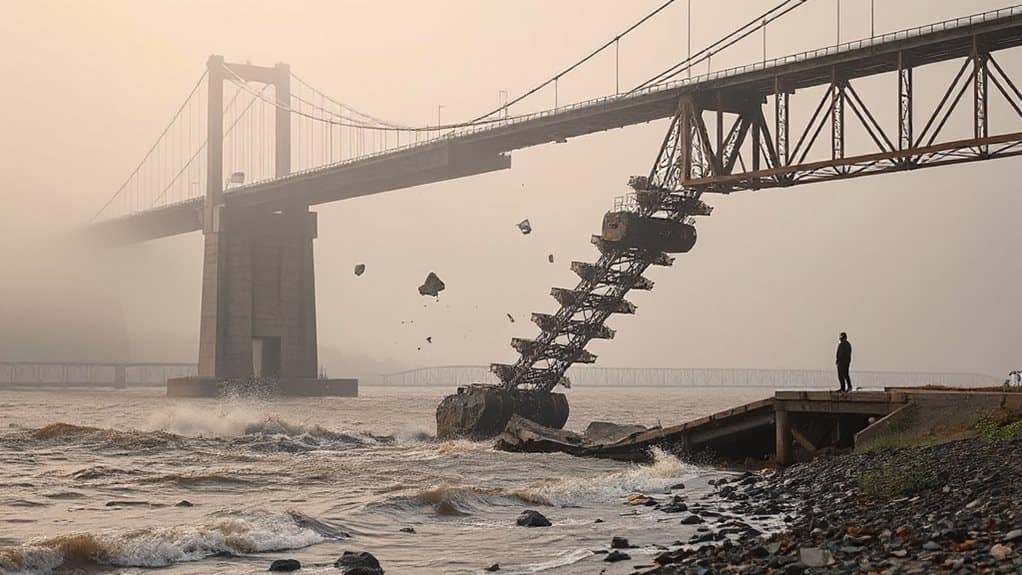
While you might think bridge collapses stem from sudden, dramatic events, they’re usually the result of a chain of identifiable causes—many of which are preventable.
Floods cause over half, often eroding support slowly. Collisions and overloads add stress, while design flaws or poor maintenance weaken integrity. These failures symbolize neglected warnings, systemic oversights, and the cost of ignoring incremental risks in infrastructure meant to connect and protect.
Rebuilding After a Bridge Collapse Scare
You’ve seen how small oversights can lead to major failures—floods undermining supports, unnoticed stress compounding over time, systems failing not all at once but in stages.
Now, you assess damage with aerial imaging and LiDAR, share data across agencies, and model traffic shifts.
You rebuild not just structure, but trust—using real-time observations, environmental safeguards, and coordinated planning to create something more resilient than before.
How to Turn a Scary Dream Into Real-Life Insight?

Though dreams of collapsing bridges can jolt you awake with a rush of dread, they’re less about disaster and more about revelation—offering a symbolic map of your current life changes and emotional undercurrents.
You can turn this understanding into growth by journaling the dream, noting the bridge’s condition and your emotions.
Reflect on recent shifts, identify unresolved stressors, and assess your emotional readiness—then act with clarity, not fear.
Wrapping Up
You now see how bridge collapsing dreams reflect real anxieties about change and risk. These visions aren’t random—they mirror emotional shifts and subconscious warnings. Structural failures in bridges, like in life, often stem from overlooked stress or weak foundations. By analyzing your emotions afterward, you gain understanding into hidden fears. Rebuilding mentally, much like engineering a new span, requires assessment, planning, and resilience. You turn dreams into growth.

Seraphina Lumina is a dream interpretation and symbolism researcher with a passion for exploring the connections between dreams, emotions, relationships, spirituality, and personal growth. She draws on traditional dream symbolism, psychological perspectives, and spiritual traditions to help readers make sense of their night-time experiences and the themes that may appear in them.