

You’re running late, the train pulls away, and you’re left standing on the platform—this dream reflects worries about timing, lost opportunities, or feeling behind in life. It often signals anxiety about control, direction, or goals slipping away. Your brain rehearses these fears at night to process stress and prepare for real challenges. While regret and comparison may fuel the dream, it also suggests resilience and the next chance isn’t far off.
What a Missed Train Dream Really Means
While dreams about missing a train might feel fleeting, they often carry deeper meanings tied to your waking life. Much like dreams of a damaged car, they can signal worries about control, direction, and where your life is heading.
You may be overlooking opportunities, like jobs or relationships, or fearing you’re falling behind.
These dreams reflect anxiety about timing, lost momentum, or regret over abandoned goals.
They suggest reassessing your path, adjusting expectations, and preparing for the next chance—because another train is usually coming.
Missing a train in a dream can symbolize the risk of missed chances in your waking life, especially when you hear the train moving while remaining on the platform.
Why You Keep Having Missed Train Dreams?
You keep having missed train dreams because they often reflect real-life anxieties about timing and lost opportunities.
These dreams can surface when you’re facing changes or feeling behind on personal goals, acting as mental rehearsals for stress.
They’re not random—they’re tied to how your brain processes pressure and the fear of falling short.
They can also signal unresolved stress around missed opportunities, encouraging you to reassess your priorities and sense of control in waking life.
Missed Opportunities Manifest
Because missed train dreams tap into deep-seated anxieties about timing and progress, they often mirror real-life concerns about opportunities slipping away.
You might feel goals are just out of reach, or fear falling behind peers.
These dreams highlight unacted plans, suggesting you’re overlooking chances in routine.
They don’t predict failure, but urge attention—your ambitions need a starting point, not just thought.
Timing And Life Transitions
When life feels like it’s accelerating beyond your control, missed train dreams often surface as symbolic warnings about timing and change.
You’re likely struggling with shifts, fearing loss of control or falling behind.
These dreams reflect anxiety over rigid routines, unexpected shifts, or feeling locked in place while life moves on.
They highlight the need to reassess your pace, accept flexibility, and take deliberate steps forward.
When Anxiety Shows Up as a Missed Train
You’re not just late when you miss the train in your dream—you’re revealing how anxiety shapes your sense of control. That rush of panic mirrors real-life stress responses, where small setbacks feel like major threats because your brain jumps to worst-case scenarios. Just like car-accident dreams, missed-train dreams can act as symbolic warning signals from your subconscious, pointing to areas of life where you feel pressured, overwhelmed, or off track.
Instead of spiraling, try grounding yourself with slow breaths or a quick walk, tactics that ease the mental loop and bring you back to the present.
Anxiety In Motion
You’ve likely bolted through a dream station, heart pounding, only to watch the train pull away without you—leaving you stranded on the platform, late and helpless. This motion-themed anxiety reflects real-world stress, often tied to deadlines or decisions.
Running in slow motion suggests feelings of inadequacy, while recurring lateness dreams correlate with higher anxiety, depression, and stress levels—common during overwhelming periods like lockdowns or trauma.
Dreams Of Delay
That racing heartbeat and sinking stomach as the train pulls away without you isn’t just a nighttime rerun—it’s a signal. You’re likely wrestling with timing anxieties or fear of lost control.
Studies show these delay dreams link to stress, inefficacy, and environmental pressures. They reflect not just busyness, but deeper worries about deadlines, competence, and life’s slipping clock—common, yet meaningful clues from your subconscious.
Feeling Left Behind in Your Life Journey
While chasing milestones like career advancement, relationships, or personal growth, many find themselves glancing sideways at peers who seem further ahead, sparking a quiet but persistent sense of being left behind.
You’re not alone—61% of young adults report chronic loneliness, and 33% of Americans feel isolated regularly.
This disconnect often correlates with lower life meaning, reduced control, and long-term impacts on health, work, and achievement, especially when exclusion becomes routine.
Dreams where you miss a train can mirror this same feeling of exclusion, echoing the way a falling tree in dreams symbolizes lost direction and the need to reassess where your energy and efforts are going.
How Comparison Fuels Missed Train Dreams
Seeing others’ achievements flash across your screen doesn’t just highlight their progress—it reshapes how you view your own path, often making it feel stalled or off track.
Passive scrolling fuels career-specific comparisons, amplifying frustration and perceived gaps between your reality and their highlight reels.
This isn’t just envy; it’s a cognitive distortion where future missed opportunities loom larger than past ones, intensifying regret and distorting decision-making, especially when upward comparisons lack actionable steps.
This same cycle of comparison and fear can echo the emotional tone of feelings of loss or abandonment, which often underlies dreams about searching for someone you can’t find.
The Regret You Feel After Missing the Train
You keep replaying the moment you missed the train, wondering what might’ve happened if you’d just left a minute earlier. Those lingering *what if* scenarios can quietly shape how you see your choices, even when better opportunities are already within reach.
Instead of fixating on the departure that got away, you could start noticing the doors still open around you.
Lingering What If Scenarios
Had you known how little time truly matters when imagining a missed train, you might rethink the weight you give future slip-ups.
Future misses fuel more intense regret shifts than past ones, regardless of when they occur. You overestimate what you’ve lost, amplifying regret. Anticipated regret stems mostly from lost benefits, not guilt. Correcting those assumptions reduces regret’s grip.
Embracing Present Possibilities
When you miss a train, the mind doesn’t just dwell on the moment that slipped away—it pivots quickly toward what could still be lost.
Future missed opportunities spark stronger emotional shifts than past ones, reshaping your decisions more powerfully.
You regret not the delay itself, but the benefits you might forfeit.
Anticipated loss of experience, not self-blame, drives this response.
Common Missed Train Dream Scenes
Often, missed train dreams unfold in familiar yet unsettling scenes that mirror real-life anxieties about timing and control.
You’re rushing, but the train pulls away as you arrive late or fumble for a ticket.
Doors shut just in time, crowds block your path, or you’re left standing on an empty platform, reflecting.
These moments symbolize missed chances, not just in transit, but in life’s broader voyage.
How Your Subconscious Blocks Wrong Paths
While it might feel like bad luck or poor timing, your subconscious is often the quiet designer behind missed opportunities, especially in dreams about trains. It prioritizes familiarity and safety, activating old patterns that block new paths.
Fear-driven responses, rooted in childhood, override conscious goals. These automatic behaviors, though outdated, once served as protection—now they simply reroute you, often without your awareness.
Why Timing Fears Appear in Your Dreams

Because your brain doesn’t switch off when you sleep, it keeps working through the fears you sidestep during the day—especially those tied to timing and missed chances.
Your dreams replay these anxieties, activating regions like the insula and cingulate cortex.
This nightly rehearsal helps regulate emotions, preparing you to respond more calmly to real-world setbacks, as if your mind is quietly fine-tuning resilience while you rest.
How to Reframe Missed Chances as New Beginnings
Missing a train in your dream might leave you tense, but waking up offers a chance to rethink what that moment really means.
You can reframe missed chances as new beginnings by focusing on future opportunities, which reduce regret.
welcome closure through well-rounded endings, define your purpose, and seek support—each step turns loss into growth, helping you move forward with clarity and resilience.
What to Do After a Missed Train Dream
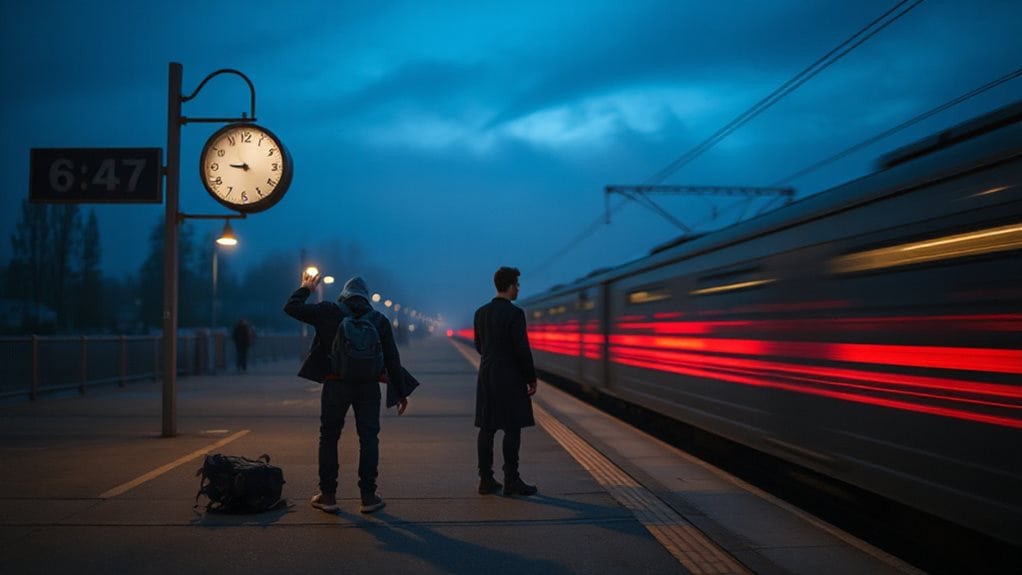
When that familiar rush of missing a train echoes from your dream into waking life, it’s worth pausing to contemplate what your subconscious might be flagging.
You’re likely feeling outpaced or disconnected from goals. Don’t freeze—act. Lower expectations, welcome flexibility, and commit to one small step. That next train is coming; catch it by choosing your own timetable.
Moving Forward: Your Next Train Is Coming
Carrying forward the rhythm of your spiritual path, you’re already closer to the next opportunity than you realize.
Missing a train signals pause, not failure, with the next one arriving soon.
Trains reflect steady progress, divine timing, and renewed direction.
Whether in dreams or life, their motion affirms you’re still on track.
Trust the voyage—you’re moving forward, even now.
Wrapping Up
You often see missed train dreams as symbols of lost chances or poor timing, but they’re really reflections of underlying anxiety and self-comparison. These dreams highlight fears about progress, not actual failure. You’re not behind—you’re simply noticing the pressure to keep up. Reframe the moment: your voyage has its own rhythm. The next opportunity is already approaching, and you’re more prepared than you think.

Seraphina Lumina is a dream interpretation and symbolism researcher with a passion for exploring the connections between dreams, emotions, relationships, spirituality, and personal growth. She draws on traditional dream symbolism, psychological perspectives, and spiritual traditions to help readers make sense of their night-time experiences and the themes that may appear in them.