

You’re not alone if you dream in black and white—this isn’t a rare quirk but a reflection of cultural and media influences. Older adults who grew up with black-and-white TV report more monochrome dreams, while younger generations typically dream in color. Studies show this shift isn’t necessarily about how we dream, but how we recall and report them. Media exposure shapes expectations, making grayscale dreams a learned memory. Your experience fits a broader pattern shaped by the world you grew up in—and there’s more to uncover about how perception and environment shape the dreaming mind.
The 1940s Belief in Monochrome Dreams

While you might assume that how people experience dreams is a fixed aspect of human psychology, the truth is more shaped by culture than biology—especially in the 1940s, when most believed dreams unfolded in black and white. Such assumptions mirror how people today may misread intense or frightening dreams as literal omens rather than reflections of unresolved internal conflict and attempts to process emotion-laden experiences.
You’d likely report monochrome dreams then, influenced by widespread grayscale media. Researchers accepted this view, though it reflected cultural priming, not actual dream content.
A 2006 study found that rural Chinese participants exposed mainly to black-and-white television reported dreams in grayscale more often than urban counterparts with colour media.
Shifting Reports: The 2001 Replication Study
You might be surprised to learn that when researchers repeated a 1942 dream study in 2001, they found a dramatic shift: back then, most students rarely or never saw color in dreams, but by 2001, over half reported frequent color. You’re likely wondering whether dreams actually changed—or if people just remember or report them differently now. This generational flip suggests it’s not the dreams that shifted, but how we think about them. Changes in media, mental health, and sleep quality over time likely influenced how often people notice and recall their dreams.
Replicated Methods, Different Results
When researchers repeated W.C. Middleton’s 1942 dream color questionnaire in 2001, you saw a dramatic shift: only 17.7% rarely or never dreamed in color, versus 70.7% in 1942.
More students now report frequent colored dreams—56.5%—and better dream recall.
Though methods were identical, results differed sharply, suggesting cultural or memory-based influences over actual dream change.
Memory vs. Reality Debate
Though the 2001 replication of W.C. Middleton’s study used identical methods, results starkly contrasted 1942: far more students now report colorful dreams.
You might wonder—did dreams change, or just memory? Evidence suggests perception, not reality, shifted. Exposure to color media likely reshaped recall, making black-and-white reports seem like a cultural artifact, not a neurological truth.
Generational Shift Revealed
While dreams themselves remain private and fleeting, the way people report them has shifted dramatically across generations, and the 2001 replication of W.C. Middleton’s 1942 study reveals this clearly.
You see far more color in dreams today—only 4.4% say “never,” versus 39.9% in 1942.
Could media, memory, or methods explain the change? The answer isn’t certain, but perception clearly evolves.
Age and the Perception of Dream Color
You might notice that older people often recall their dreams in black and white, but this isn’t just nostalgia—it’s tied to the media they grew up with. If you were surrounded by black-and-white TV and film as a kid, you’re more likely to report grayscale dreams, even now. And while aging affects how we see color, it doesn’t necessarily change how we remember dream colors unless that early visual experience shaped your expectations. Interestingly, just as early exposure to certain media can shape how you recall dream colors, blue eyes in cats remain rare in the real world because they depend on specific, uncommon genetic combinations.
Age and Dream Recall
As you grow older, your ability to remember dreams shifts in predictable but subtly complex ways, shaped by cognitive development in childhood and gradual decline in later years.
You recall more dreams around age 7, when memory and narrative skills grow.
As an adult, recall slowly drops, especially after 35 for men, 40 for women.
Aging sleep patterns and memory interference reduce recall, though dream length stays stable.
Media Exposure Effects
If you’ve ever wondered why some people claim to dream in black and white, the answer might lie less in biology and more in the TV shows they watched as kids.
Your exposure to black-and-white or color media, especially during childhood, shapes how you recall dream colors. Longer color media use usually means more colorful dreams, though some studies show mixed results.
Urban viewers often report more color dreams than rural ones, likely due to greater media access.
Still, factors like memory, imagery style, and cultural attitudes also play key roles.
The Role of Media in Shaping Dream Recall

Pulling from what you’ve seen before bed might be more than just idle entertainment—it could shape what shows up in your dreams. Your media habits, especially pre-sleep viewing, influence how often and how clearly you recall dreams. High dream recallers report more media content, while social media use increases dream intensity and negative themes, supporting the continuity between waking life and dream experiences. Just as tailored sound environments from white noise machines can influence sleep quality, the media you consume before bed may fine‑tune the emotional tone and vividness of your dreams.
Questionnaires vs. Diaries: Measuring Dream Content
You’ve likely noticed how the shows or social media you scroll through before bed can seep into your dreams, coloring their themes or emotional tone. Because dreams frequently reflect waking-life concerns and routines, tools that track this content can also highlight how stress, sleep quality, or even episodes of false awakenings show up in what you recall.
When measuring these dreams, questionnaires capture recent recall with solid reliability, while diaries track patterns over time.
You’ll find self-ratings often exceed external judges’ assessments, especially for positive emotions, and report length skews results—longer dreams yield more consistent ratings.
REM Awakenings and the Science of Dream Color

Although dreams often feel vivid and lifelike, their visual qualities—especially color—are not always immediately clear when studied under controlled conditions.
You’ll find that REM awakenings reveal color in most dream reports, with studies showing rates from 50% to over 80%. Snyder even suggested all REM dreams may contain color.
Activation in your brain’s visual areas during REM supports this, aligning with the rich imagery you experience.
Historical Views on Color in Dreams
While earlier thinkers took dream color for granted, the mid-20th century brought a surprising reversal in how dreams were perceived. You’d find philosophers like Aristotle or Descartes mentioning colored dreams casually, assuming they were normal.
Yet by the 1950s, researchers claimed most dreams were black and white—likely influenced by monochrome media. Surveys then showed low color recall, unlike later REM studies, which revealed a far more vivid reality.
Why the Myth of Black-and-White Dreams Persisted
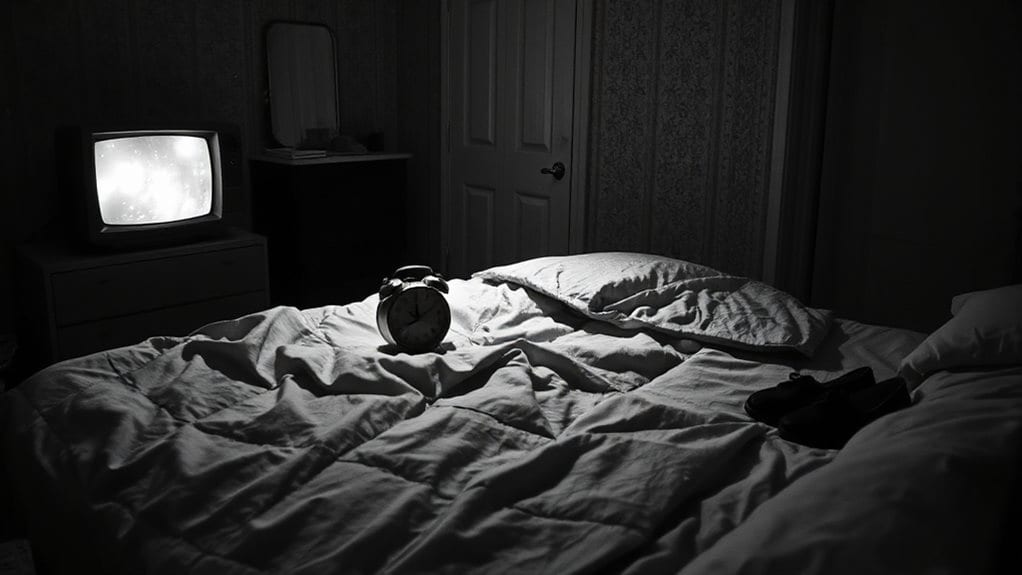
Dreams weren’t always assumed to be in black and white, but for much of the mid-1900s, that’s exactly what many researchers believed.
You absorbed this idea because early film and TV shaped how people remembered dreams. Your brain, influenced by media, used those templates.
Older adults exposed to black-and-white screens report more monochrome dreams—proof that culture, not biology, fueled the myth.
Wrapping Up
You now know the idea that people dream only in black and white is more myth than fact. Early reports were likely shaped by the monochrome media of the time. Modern studies, using dream diaries and REM awakenings, show most people dream in color. Age and exposure to old films can influence recall, though. Questionnaires sometimes skew results, but better methods confirm color is the norm. So, while the myth lingers, science paints a different, fuller image.

Seraphina Lumina is a dream interpretation and symbolism researcher with a passion for exploring the connections between dreams, emotions, relationships, spirituality, and personal growth. She draws on traditional dream symbolism, psychological perspectives, and spiritual traditions to help readers make sense of their night-time experiences and the themes that may appear in them.