
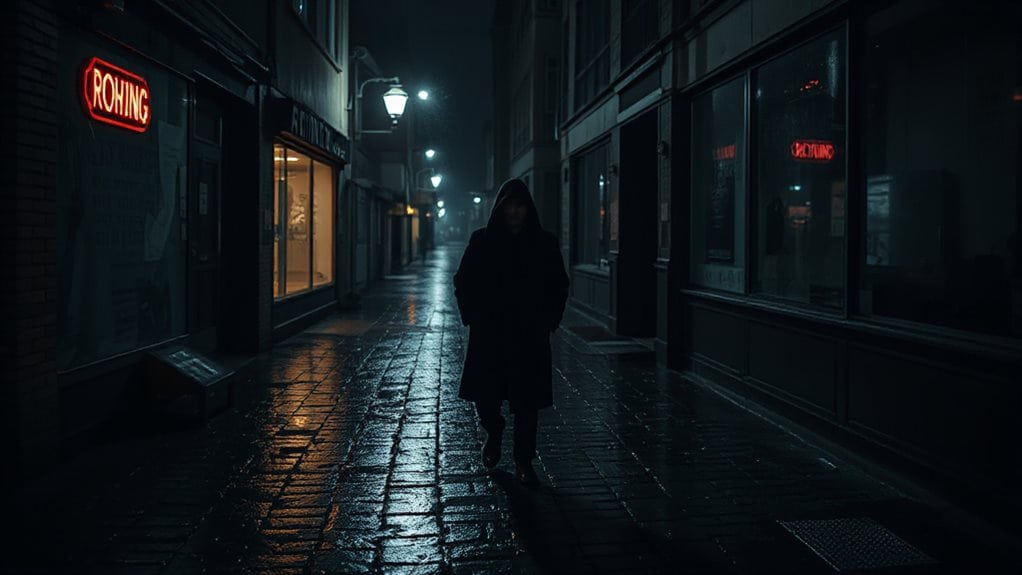
You’re seeing a mysterious stranger who warns you, which usually signals an unprocessed inner conflict or a subconscious intuition about danger. The stranger’s role—guard, thief, or lover—shows which part of yourself needs attention, while the emotional intensity and any physical sensations (like heaviness) amplify the message. Numbers such as 5 or 7 often appear, indicating metamorphosis and heightened discernment. Record the dream, compare it to recent events, and test the gut feeling against real‑life situations; if you keep exploring, you’ll uncover deeper guidance.
How to Decode a Stranger in Your Dream and Spot Hidden Warnings

Why do mysterious strangers keep showing up in your dreams, and what might they be trying to tell you?
You decode the figure by noting repeated appearances, emotional intensity, and physical sensations after waking. In some cases, especially when your body feels frozen or heavy, these encounters may overlap with experiences of sleep paralysis and the brain’s REM-related immobility. Observe whether the stranger mimics you, stays passive, or threatens. Correlate timing with real‑world events, and compare the dream’s tone to your waking relationships. This analysis reveals whether the encounter signals an inner warning or merely reflects anxiety. Dreamwork often shows that the stranger can mirror your own protective instincts, such as reaching for a knife, highlighting a learned response to perceived danger.
What a Stranger Dream Really Means: The Core Warning
What a stranger dream really means hinges on the core warning your unconscious is sending. You’re encountering a projected voice that mirrors an unprocessed conflict or hidden trait. The stranger’s role—guard, thief, lover—signals which internal dynamic needs attention. Even if the setting feels safe, fear often masks its true, non‑threatening nature, urging you to examine underlying reactivity patterns. Just like dreams of bird messengers that carry symbolic guidance from the unconscious, a mysterious stranger can arrive as an inner warning system translating deeper truths into a vivid, confrontational form.
Intuition Manifested as a Stranger Encounter

How does a stranger in a dream become the vehicle for your intuition? You notice the figure delivering a subtle sensory cue—a gut feeling, a sudden sense of direction, or a quiet warning. This cue originates from subconscious pattern‑recognition built since childhood, distinguishing genuine intuitive pings from trauma‑driven urges. Your body registers it before rational analysis, guiding you toward safety or opportunity. Much like dream encounters with spirit guides such as unicorns, this mysterious stranger can mirror a deeper spiritual intelligence that nudges you toward self-discovery and positive change.
Gender‑Specific Meanings in Stranger Dreams
You’ll notice that women’s stranger dreams often echo rumor‑driven anxiety, especially when you’re single and the dream hints at wedding uncertainty, while men’s versions tend to stress a trust‑caution imperative. This gender split reflects how unfamiliar male figures trigger competitive or hostile scenes for men, whereas women’s narratives focus more on relational tension and social expectations. In some cases, these stranger warnings carry the same heightened realism and lingering impact seen in out‑of‑body experiences, where the message feels less like fantasy and more like a serious, waking‑life alert.
Women: Rumor‑Driven Anxiety
Why do women often experience anxiety‑driven rumors in their dreams about strangers? You notice male strangers appearing as aggressive symbols, reflecting social role pressures and fear‑training mechanisms. These encounters encode rule‑governed warnings, strengthening emotional memory.
Female strangers tend to be friendly, mirroring occupational shifts. Dream narratives help regulate negative emotions, preparing you for potential real‑life threats without excessive dramatization.
Single Women: Wedding Uncertainty
What does it mean when a single woman repeatedly dreams of a wedding ceremony that feels uncertain or unfinished?
You may be processing an internal union, integrating masculine and feminine aspects, or confronting shadow parts. The unfinished ceremony signals a need for personal commitment, perhaps toward a new goal, role, or self‑acceptance. It highlights transitional energy, urging you to clarify values and reconcile inner contrasts.
Men: Trust‑Caution Imperative
How often do you notice that the strangers who appear in your dreams are mainly male, and what does that pattern imply for your waking life? You should these men as symbols of aggressive impulses and a masculine subconscious urging decisions. Their presence signals a trust‑caution balance, warning you to evaluate control struggles and hidden fears. Recognizing this pattern helps you navigate real‑world interactions with measured confidence.
Numbers Behind Stranger Symbols (5, 7, 9, 11)
You’ll notice that the number 5 appearing with a stranger signals a transformative change, often tied to sudden opportunities or the completion of a hidden goal.
When 7 shows up, it points to heightened discernment, urging you to control impulsive emotions and recognize influential connections.
Together, these numbers frame the dream’s warning as a blend of personal growth and sharpened intuition.
In some cases, such numerical warnings may also point toward awakening your compassionate instinct, much like dreams where protecting animals symbolizes a drive to restore inner balance and emotional wholeness.
Five Symbolizes Transformative Change
Why does the number five repeatedly appear in symbols that signal change? You’ll notice that five marks freedom, journey, and a shift toward personal truth. Angelic and tarot references link it to rapid growth, while the pentagon and pentacle echo the five senses and elemental balance. In dreams, 5 signals an inner readiness for metamorphosis, urging you to discard old patterns and welcome new possibilities.
Seven Indicates Heightened Discernment
From exploring how five signals readiness for metamorphosis, the next step is to examine why seven marks a surge in discernment when strangers appear in dreams.
Seven, linked to spiritual perfection, appears 735 times in Scripture, signaling divine insight.
In dream analysis, seven strangers heighten intuition, warning of hidden threats and urging you to differentiate genuine alerts from deceptive omens.
Practical Steps to Verify a Stranger Dream’s Message

How can you tell whether the stranger’s warning in your dream is merely symbolic or actually points to a real‑world risk? Record the dream immediately, note the stranger’s words, emotions, and any recurring symbols. Compare those details with recent events, relationships, or health concerns. Track how often the dream appears and whether its intensity changes after you act. Use Jungian or Freudian lenses to interpret archetypes, then test your gut reaction to any corresponding real‑life situation.
Trust vs. Skepticism: When to Heed or Dismiss the Warning
When a dream‑time stranger delivers a warning, you can’t treat every vivid message as a literal forecast, yet you also shouldn’t dismiss it outright as mere symbolism.
Trust the warning if it aligns with patterns you’ve repeatedly encountered and you have solid experience in that domain.
Apply skepticism when the signal feels like a hunch, lacks supporting evidence, or conflicts with rational analysis.
Balance intuition and data to decide whether to act.
Wrapping Up
By weighing the dream’s symbols, gender cues, and any recurring numbers, you can gauge whether the stranger’s warning aligns with real‑world risks or merely reflects subconscious anxiety. Trust your intuition when patterns match external signs, but verify facts before acting on the message. Balancing skepticism with openness lets you use the dream as a useful alert without overreacting to imagined threats.

Seraphina Lumina is a dream interpretation and symbolism researcher with a passion for exploring the connections between dreams, emotions, relationships, spirituality, and personal growth. She draws on traditional dream symbolism, psychological perspectives, and spiritual traditions to help readers make sense of their night-time experiences and the themes that may appear in them.