

Your recurring dream themes often reveal how you’re handling stress, trauma, or unresolved emotions over time. If you keep dreaming about being chased or falling, it usually means you’re avoiding something or feeling out of control. These patterns tend to shift as your emotional state changes, becoming less intense with better coping. Therapy can help rewrite these dreams, reducing their grip. The way your dreams evolve might say more about your inner progress than you realize.
What Recurring Dreams Say About Your Stress

While your mind rests, it often revisits unresolved tensions, and recurring dreams can act as a window into your stress levels. You may also notice shifts in your dreams when medications, substances, or sleep disorders alter your REM sleep patterns over time.
You may notice more negative dreams when daily stress or emotional frustration builds, especially if you ruminate at night.
These repetitive themes reflect ongoing psychological strain, linking closely to anxiety, depression, and even trauma—offering you subtle, persistent feedback about your inner state.
This connection is supported by research on Japanese adolescents showing a significant association between dream patterns and mental health symptoms Dreams, anxiety, depressive symptoms.
Why You Keep Dreaming About Being Chased or Falling
You’re not alone if you’ve ever bolted through a dark forest in your sleep, heart pounding as something unseen closes in, or suddenly plunged from solid ground into empty space.
These chase and fall dreams often reflect avoidance, unresolved stress, or feelings of losing control.
They’re common, usually negative, and repeat more when distress is high—your mind nudging you to face what you’re running from or learn to steady your footing. Recurring chase and fall dreams, like other threat/obstacle dreams, can be your subconscious signaling that it’s time to confront unresolved issues rather than keep avoiding them.
Are Recurring Dreams Linked to Unresolved Trauma?
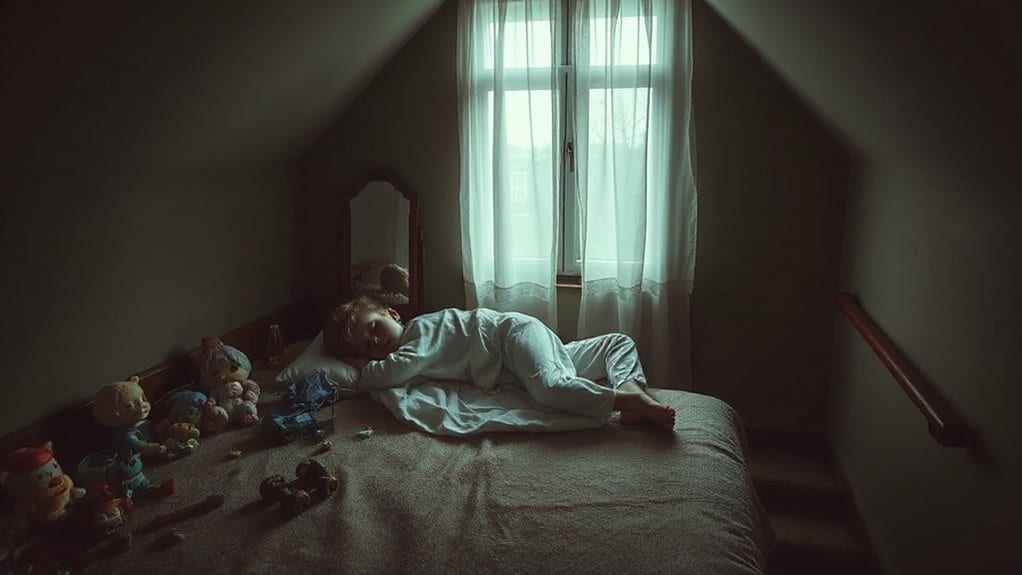
Because your brain doesn’t stop working when you sleep, recurring dreams—especially the unsettling ones—might be doing more than just replaying random fears.
You may be processing unresolved trauma, even if the dream isn’t a full nightmare. These patterns can reflect emotional loops tied to past experiences, suggesting your mind is still working to integrate what happened, often without your conscious awareness. In some cases, recurring torture imagery can act as a symbolic release of stress and conflict, giving your subconscious a way to surface and work through unresolved emotions.
Do Recurring Dreams Change Over Time?
Recurring dreams don’t always stay the same—they can shift in subtle but meaningful ways over time, even if the underlying emotional charge remains familiar.
You might notice changes in setting or characters, yet the core theme—like failure or threat—persists. As stress fades or coping improves, these dreams often become less intense, shifting from nightmares to symbolic replays, signaling quiet progress beneath the surface.
In some cases, recurring dreams may even take the form of a dream within a dream, hinting at deeper spiritual or emotional layers that are gradually coming into focus.
Can Therapy Help Stop Recurring Dreams?

While recurring dreams can persist for years, especially when tied to unresolved stress or trauma, therapy offers a proven path to reducing or even stopping them. You can use imagery rehearsal therapy (IRT) to rewrite nightmares, lowering their emotional impact. Cognitive behavioral therapy for nightmares (CBT-N) also helps, cutting frequency and severity. Because recurring violent or stabbing dreams often reflect unresolved emotional conflicts, therapy provides a structured way to process these feelings and reduce their intensity over time. With just 5–6 sessions, you may sleep better, feel more in control, and see lasting relief—benefits often maintained for over a year.
Wrapping Up
You often revisit the same dreams because they reflect persistent stress or unresolved issues. Over time, these themes may shift slightly, revealing changes in your emotional state. Being chased or falling usually signals anxiety or a sense of losing control. While trauma can play a role, not all recurring dreams are deeply rooted in the past. Therapy helps you understand and reshape these patterns, reducing their frequency.

Seraphina Lumina is a dream interpretation and symbolism researcher with a passion for exploring the connections between dreams, emotions, relationships, spirituality, and personal growth. She draws on traditional dream symbolism, psychological perspectives, and spiritual traditions to help readers make sense of their night-time experiences and the themes that may appear in them.