

You keep having the same dream because your brain is trying to process unresolved emotions, unmet needs, or lingering anxieties you haven’t addressed while awake. Recurring dreams often reflect hidden stress, fears of failure, or desires for change. They’re more common in childhood but can start at any age, influenced by sleep quality and emotional avoidance. Women tend to recall them more, especially under stress. These patterns aren’t random—they’re clues. There’s more beneath the surface worth exploring.
How Common Are Recurring Dreams Across Different Age Groups

Recurring dreams are a surprisingly common experience across all stages of life, with research showing they often begin in childhood and evolve in theme and frequency as you grow. Poor sleep quality and disrupted REM cycles can influence how often these dreams occur and how clearly you remember them.
Around 39% of people report them starting in childhood, 21% in adolescence, and 15% in adulthood.
While kids often dream of monsters or threats, adults more commonly face pursuits, accidents, or misfortunes.
Being chased is one of the most prevalent themes in recurring dreams, especially among adults.
Gender Differences in Dream Recall and Recurring Themes
You’re more likely to remember your dreams if you’re a woman, and research consistently backs this up. This difference grows clearer with age, especially in teens and adults, likely due to socialization. While preteens show no gender gap, stress affects recall differently—men recall less under stress, women more. Emotional content in dreams, however, stays similar across genders. Some research on dreams about moving into a new apartment suggests that recurring imagery can reflect a longing for change or personal growth, which may be noticed more often by people who recall their dreams more frequently.
The Most Frequent Themes in Adult Recurring Dreams
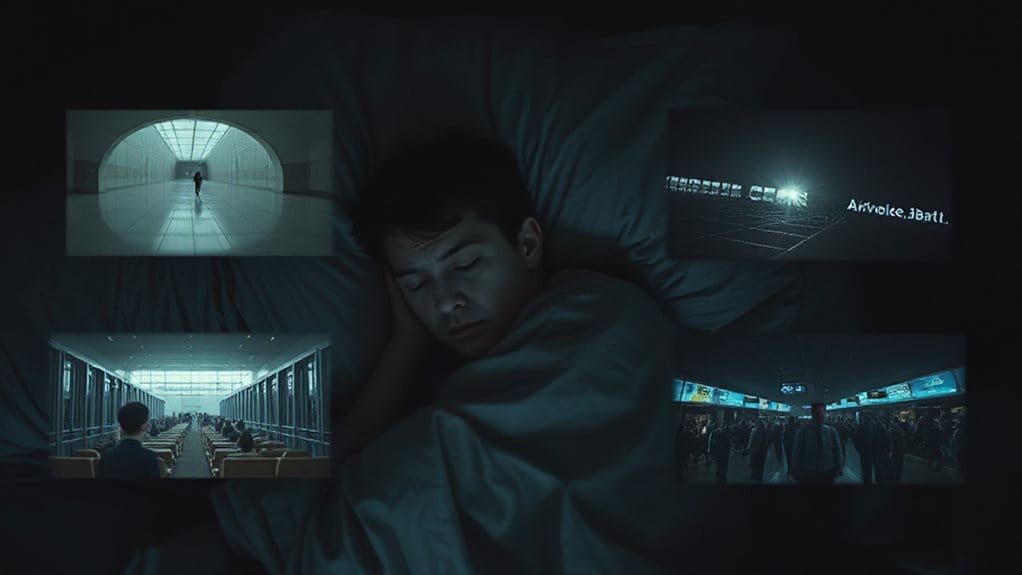
Often, the dreams you revisit most aren’t peaceful escapes, but vivid scenarios rooted in stress and unresolved emotions.
You’re likely to experience falling or being chased, both tied to anxiety and loss of control.
Recurring school-related dreams reflect performance fears, while familiar locations ground these narratives in memory.
These themes, often negative, mirror unmet psychological needs like competence, autonomy, or connection in waking life.
Similarly, recurring dreams of floods outside your house often signal overwhelming emotions, anxiety, and a need to address issues before they become unmanageable.
Psychological Needs and Their Link to Repetitive Dream Content
You might notice your recurring dreams turn negative when your needs for autonomy, competence, or connection go unmet. When you brush aside these frustrations instead of addressing them, the same dream themes keep coming back. Think of it as your mind’s way of replaying unresolved stress until you finally pay attention. In many cases, these recurring dreams mirror unresolved conflicts or hidden emotional tension that your subconscious is trying to bring into awareness.
Unmet Needs Shape Dreams
When psychological needs go unmet, dreams often become a nightly stage for unresolved tension, reflecting inner struggles through repetitive, emotionally charged narratives.
You feel trapped when autonomy is blocked, face failure when competence wanes, and fear isolation when relatedness suffers.
These unmet needs fuel anxiety, sadness, or anger in dreams, turning sleep into a mirror for waking distress you’re still trying to process.
Emotional Avoidance Fuels Repetition
Because you push certain emotions aside during the day, your dreams may pull them back into focus at night, turning avoidance into repetition. When you sidestep guilt, fear, or stress while awake, your subconscious replays those unresolved feelings.
Nightmares about falling or being chased often reflect avoided fears of failure or change. This cycle continues until you confront what you’re avoiding—dreams won’t stop reminding you.
The Role of Emotions and Avoidance in Shaping Recurring Dreams

Often, recurring dreams act as emotional barometers, reflecting unresolved tensions and unmet psychological needs that linger beneath the surface of daily life.
You dream repeatedly when emotions like anxiety or loneliness go unaddressed, and avoidance keeps problems active.
These dreams mirror stress, trauma, or frustration, signaling what you’ve yet to process—offering clues, not chaos, to your inner world.
They can also spotlight breakup dreams, which often arise from insecurities, fear of rejection, or unhealed relationship wounds that your mind is still trying to process.
Sleep Duration’s Impact on Dream Recall and Nightmares
Your recurring dreams may reveal emotional undercurrents, but how well you remember them—and whether they turn into nightmares—depends heavily on how long and how steadily you sleep.
Longer sleep enhances dream recall by extending light sleep, when dreams are more easily remembered.
You’re also more likely to recall vivid or vague dreams with consistent patterns.
Shorter sleep may increase nightmare frequency, especially if disrupted.
Health Risks Associated With Chronic Nightmares

You’re at triple the risk of dying before 70 if you have weekly nightmares, a link that stays strong even after accounting for smoking, obesity, or mental health.
These disturbing dreams fuel chronic stress, raising cortisol and speeding up biological aging—which explains nearly 40% of that increased mortality risk.
It’s not just your sleep that suffers; your heart, mood, and daily functioning take hits too.
Nightmares and Early Mortality
While nightmares are commonly dismissed as fleeting disturbances, recurring ones may signal something far more serious—your risk of early death could be more than tripled if you experience them weekly.
Studies show frequent nightmares predict faster biological aging and premature mortality, even after adjusting for health factors.
They’re linked to cellular stress, poor sleep repair, and conditions like heart disease, making them a potential red flag for long-term health.
Chronic Stress and Aging
Because nightmares do more than disturb your sleep—they fuel a cycle of chronic stress that accelerates aging—research now links them to measurable declines in long-term health.
You experience prolonged cortisol elevation, impairing cellular repair.
Even monthly nightmares disrupt sleep and speed biological aging.
Chronic stress from recurring nightmares contributes to 40% of accelerated aging, surpassing risks like poor diet or inactivity, making them a silent driver of long-term decline.
Changes in Dream Patterns During the Pandemic Era
When life took an unexpected turn in early 2020, so did the way people dream. You likely noticed more vivid or intense dreams, as half of people reported changes during total lockdown.
Dream recall and nightmares increased, tied to stress, sleep shifts, and anxiety. Women and younger individuals saw stronger effects.
Emotional intensity rose, but patterns eased during partial lockdowns, suggesting adaptation.
Wrapping Up
You might have the same dream every night because your brain is processing unresolved emotions or unmet psychological needs. Recurring dreams often reflect stress, anxiety, or avoidance, especially when life feels overwhelming. They’re common across ages and genders, though women tend to recall them more. Poor sleep increases nightmare frequency, and chronic ones may signal health risks. The pandemic also shifted dream patterns, making them more intense.

Seraphina Lumina is a dream interpretation and symbolism researcher with a passion for exploring the connections between dreams, emotions, relationships, spirituality, and personal growth. She draws on traditional dream symbolism, psychological perspectives, and spiritual traditions to help readers make sense of their night-time experiences and the themes that may appear in them.