
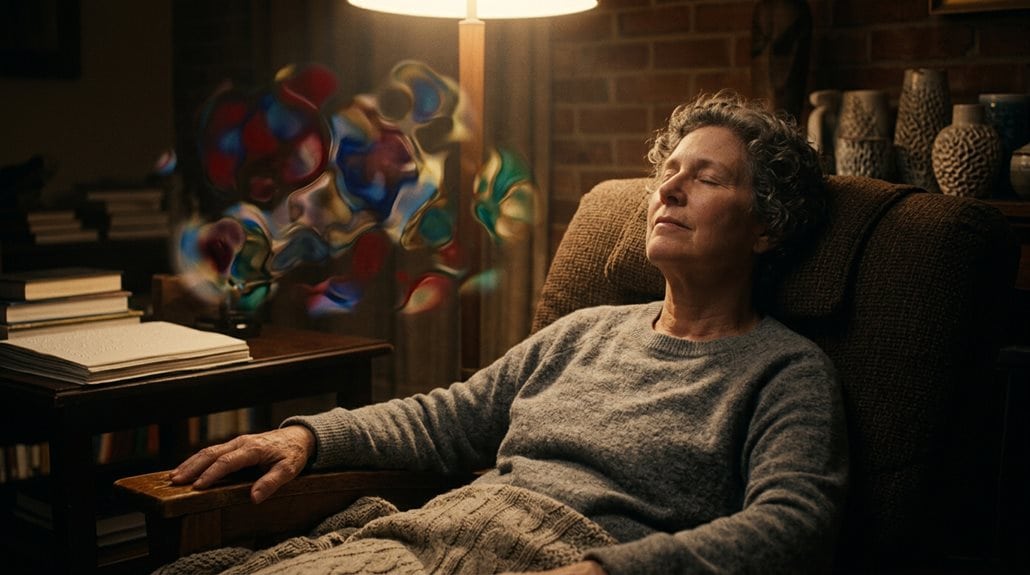
Most blind people do not dream in images because their brains lack visual memories and imagery. Instead, their dreams focus on sounds, touch, and emotions, with the visual cortex sometimes activating without creating detailed visualizations. Congenitally blind individuals often experience vague flashes or abstract scenes, if any, while those who become blind later in life may retain more visual dream content. The interaction of neural activity and sensory reliance shapes these unique dream experiences—exploring this reveals how perception varies in the absence of sight.
How Do Dreams Form in the Brain of the Blind?
Even without visual input, the brains of blind individuals still generate dreams through complex neural activity, particularly within the visual cortex. During REM sleep, neural signals activate this area, driven by brain plasticity and cross-modal interactions.
These sensations are shaped by other senses, leading to simple flashes or blobs, not detailed images, in dreams of congenitally blind people. In some cases, REM sleep can also produce sleep paralysis, a state in which the mind wakes while the body remains temporarily immobile.
Can People Born Blind Experience Visual Dreams?
Do people born blind ever experience visual dreams? Generally, no. Congenitally blind individuals lack visual memories and visual imagery, so their dream experiences don’t include detailed visual content.
Although brain scans show activity in the visual cortex, it doesn’t translate to visual dreams. When visual phenomena occur, they’re vague flashes or abstract perceptions rather than clear images. Dream imagery can still be influenced by dream symbolism, which often relies on nonvisual elements like sound, touch, and emotion.
What Visual Elements Appear in Dreams of the Blind?

In the dreams of those born blind, visual sensations are often limited to simple phenomena like flashes, spots, or brightness, rather than detailed images.
Since they lack visual memories, their brain activity during sleep suggests that these visual elements originate from internal processes rather than external images.
This indicates that the visual components in their dreams are primarily created by the brain itself, not by past visual experiences.
For many people, dream symbols can also reflect identity and self-worth, especially when feelings of vulnerability or loss are present.
Nature of Visual Sensations
For individuals born blind, visual sensations in dreams tend to differ markedly from those experienced by sighted people, often lacking detailed imagery.
Congenitally blind individuals report vague visual sensations like flashes or blobs, while brain activity in the visual cortex suggests internal visual experiences.
These dreams often involve multisensory experiences, blending sound, touch, and other senses rather than traditional visual imagery.
Visual Memory Absence
When examining the dreams of individuals born blind, it becomes clear that they rarely contain visual memories or elements resembling the images sighted people experience.
Congenitally blind individuals typically lack visual imagery in dreams, as brain activity in the visual cortex relates to other sensory experiences.
The absence of visual memories shapes their dreams, focusing instead on sounds, touch, and spatial awareness.
Internal Brain Activity
Although blind individuals lack visual memories from their waking life, their brains still generate visual-like experiences during dreams through internal activity. Brain scans reveal that the visual cortex remains active during sleep, especially in congenitally blind individuals.
These individuals produce simple flashes or spots. These visual sensations are shaped by neural activity, brain plasticity, and non-visual senses, forming abstract or symbolic internal sensations.
Does Brain Activity During Sleep Show Visual Processing in the Blind?

Research indicates that even in the absence of visual experience, the brains of congenitally blind individuals show activity in the visual cortex during sleep. EEG studies reveal visual-related electrical activity, suggesting some form of visual processing.
This brain activity may relate to abstract or non-literal representations, and reports of visual-like dreams support the idea that internal neural mechanisms generate visual sensations during sleep. In this context, subconscious cues can also shape dream content through tension, anxiety, and emerging issues.
How Do Other Senses Influence Dreams in Those Who Are Blind From Birth?
For individuals born blind, dreams rely heavily on senses other than sight, primarily touch, sound, and spatial awareness.
These non-visual senses help shape their dreams, with tactile and auditory inputs creating vivid dream experiences.
Enhanced development of these senses supports complex dreams, influencing spatial and emotional aspects, and compensates for the lack of visual imagery in their dreams.
What Differences Are There Between Dreams of Late-Blind and Congenitally Blind People?

The differences in dreaming experiences between late-blind and congenitally blind individuals highlight how the timing of vision loss influences the content and sensory focus of dreams.
Late blindness often preserves visual dream imagery, supported by visual cortex activity.
While congenitally blind people rely more on sounds and touch, with brain imaging showing minimal visual components in their dream content.
Wrapping Up
In essence, the dreams of blind individuals differ significantly based on their visual experience. While those born blind typically do not see images, they often experience vivid dreams through heightened senses like sound and touch. Conversely, late-blind individuals may retain visual memories, leading to dreams with visual elements. Brain studies support these differences, highlighting how sensory deprivation influences dream content and neural activity during sleep. Understanding these variations deepens our grasp of how the brain constructs dreams beyond sight.

Seraphina Lumina is a dream interpretation and symbolism researcher with a passion for exploring the connections between dreams, emotions, relationships, spirituality, and personal growth. She draws on traditional dream symbolism, psychological perspectives, and spiritual traditions to help readers make sense of their night-time experiences and the themes that may appear in them.