

You’re seeing a game character turn real because recent gaming leaves neural traces that merge with your episodic memories, creating vivid hybrid scenes. Your brain blends visual, narrative, and emotional cues from the game with personal experiences, which can trigger identity shifts during REM sleep. These shifts may feel like depersonalization (watching yourself from outside) or derealization (the world seems foggy). While a single dream is usually symbolic, recurring loss‑of‑self dreams could signal deeper dissociation, and the next sections explain how to spot red flags and manage them.
Why Video‑Game Characters Appear in Your Dreams
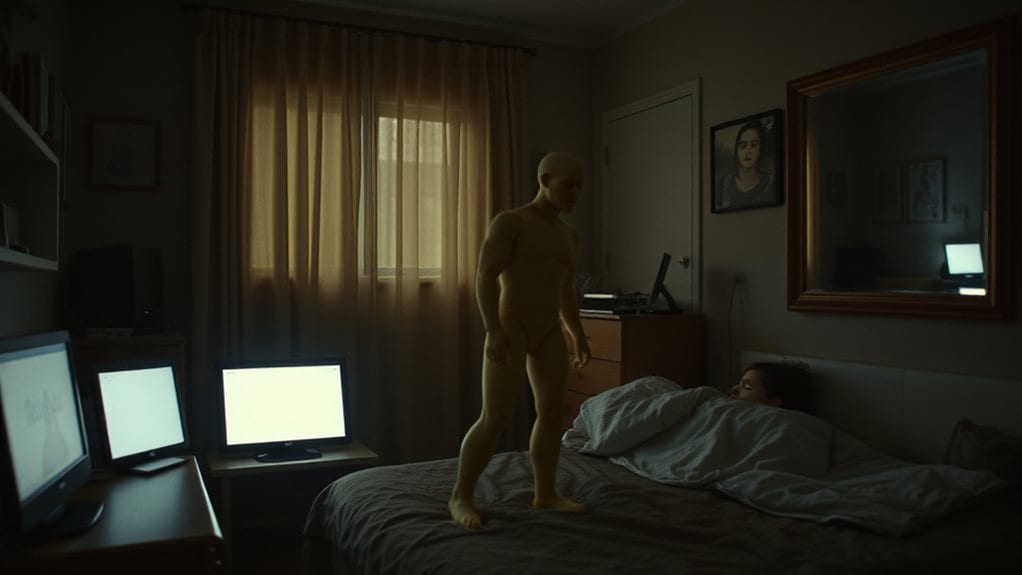
When you finish a gaming session, the vivid visuals, spatial layouts, and narrative beats you just experienced don’t simply disappear; they linger as neural traces that the dreaming brain can pull into sleep. Déjà rêvé mechanisms can also blend these game‑based traces with older dream fragments, so certain in‑game moments later feel strangely familiar in waking life.
Your mind reuses those strong sensory traces, so game worlds, avatars, and story fragments surface as dream content.
Familiarity with a title and repeated control of a character make those images especially likely to be recombined during sleep.
Dreams often reflect personal associations with the characters, linking them to inner traits, goals, or memories.
How Memory, Media, and Self‑Images Blend in Dream Scenes
After a gaming session ends, the brain doesn’t simply discard the visual and narrative cues; it weaves them into the broader fabric of recent memories, media exposure, and self‑concept.
You notice dream scenes that merge game graphics, plot fragments, and personal memories, forming composite images.
Hyper‑association links emotionally salient moments with distant experiences, while the hippocampus creates junctions that blend self‑images, media symbols, and episodic details into a coherent, though surreal, narrative.
These hybrid dream scenes can become recurring when they are tied to unresolved emotional conflicts, prompting the mind to replay similar game‑infused narratives until the underlying issues are processed and integrated.
The Role of Dream Dissociation in Identity Shifts

You may notice that when your dream narratives break apart, your sense of self can split into multiple, fragmented selves, and those shifts often mirror the way you switch identities in waking life.
The loss of a stable first‑person viewpoint during REM sleep tends to produce abrupt character changes, which research links to higher dissociative experience scores. This fragmentation of self can be intensified during moments of partial lucidity, when you briefly realize you are dreaming but cannot fully control or stabilize the dream’s shifting identity landscape.
Fragmented Self‑Perception
Although dream dissociation can feel like a fleeting glitch, it actually mirrors how fragmented self‑perception develops during waking life.
You notice disrupted memory continuity, reduced ability to integrate thoughts, and occasional depersonalization.
Research links chaotic dream narratives and inconsistent point of view to these traits.
Trauma, stress, and REM disturbances amplify the split, while improved sleep and meta‑awareness can help restore a more cohesive sense of self.
Dream‑State Identity Switching
When you drift into REM sleep, the brain’s chaotic neural patterns let different mental states disengage from the waking self, creating a fertile ground for identity switching.
Alpha‑beta wave shifts enable alternative personas to emerge, while primary consciousness observes.
Lucidity can reverse the switch quickly, and fragmented memories integrate, offering understanding into suppressed aspects without pathological disorientation.
Does That Avatar Feel Like Depersonalization or Derealization?
Does the avatar in your dream feel more like depersonalization or derealization?
If you notice you’re observing yourself from outside, feeling robotic, or disconnected from your thoughts, the dream leans toward depersonalization symbolism.
If the surrounding game world appears foggy, flat, or unreal, it mirrors derealization imagery.
Clinical relevance depends on whether these sensations persist while awake, cause distress, or disrupt daily functioning.
In some cases, this kind of dream also reflects a deeper search for belonging and uncertainty about your place in the social world.
Dream Alters vs. DID Alters: Key Similarities
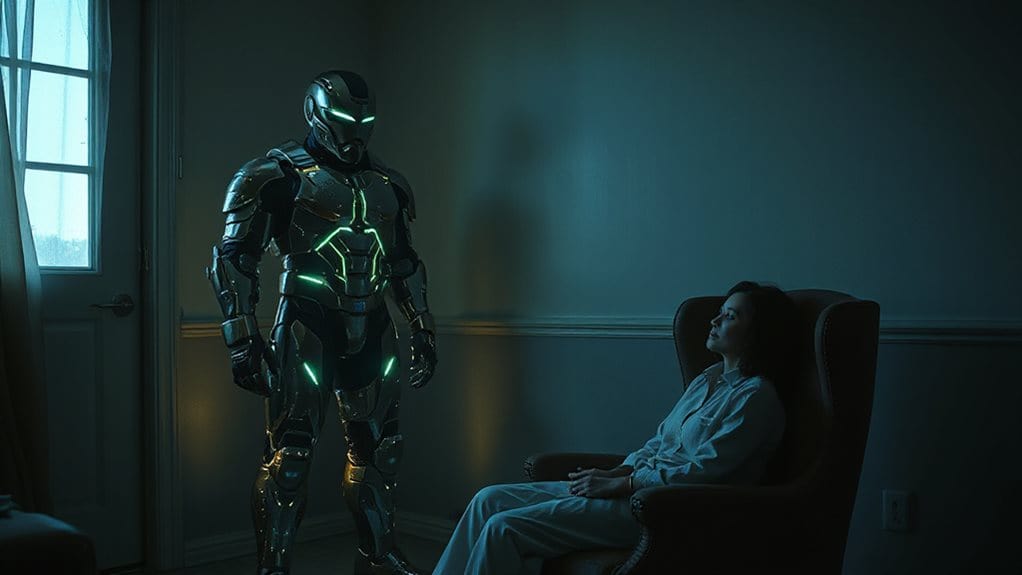
Often, the most striking common ground between dream characters and DID alters lies in how each feels like a separate, autonomous person inside your mind. Both can act with distinct voices, intentions, and vivid lifelike qualities that feel “other” yet arise from the same brain. They may shift viewpoint, switch control, and coexist with a witnessing self. These phenomenological parallels are documented, though they don’t equate a dream character with a clinical alter. In third-person dreams, this witnessing self can resemble an observer dream phenomenon, where you watch your own actions from the outside while still sensing a distinct “you” within the scene.
Common Triggers: Trauma, Stress, and Late‑Night Gaming
If you’ve spent a lot of late‑night hours battling enemies or solving puzzles, those sessions can become powerful triggers for the dreams that follow.
Trauma and stress amplify threat‑simulation, so intense or violent gameplay can imprint neural patterns that spill into REM.
Late‑night gaming raises cortisol, blurs the sleep‑game boundary, and creates vivid, intrusive dreams featuring game mechanics, characters, and decision‑making cues.
When a One‑Time Dream Is Just a Symbol, Not a Disorder
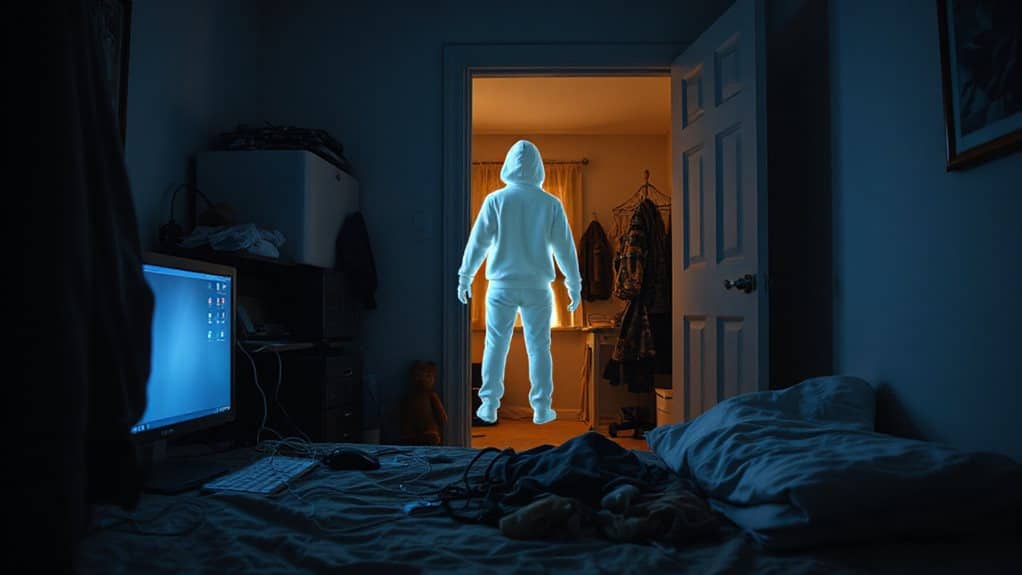
You might notice that a single dream about a game character turning real usually reflects symbolic brain processing rather than a pathological signal; it often serves as a brief sandbox where your mind experiments with identity play and narrative closure.
Because the imagery is tied to recent media exposure or a fleeting emotional state, it fits within normal dream variation and doesn’t imply persistent dissociation.
Only when similar themes recur in waking life, causing confusion or functional impairment, would a clinical concern become relevant.
Symbolic Brain Processing
When REM sleep dominates, your brain shifts into a mode that favors symbolism over strict logic, allowing a single vivid dream—like seeing a game character become real—to act as a compressed snapshot of emotional and cognitive processing rather than a sign of disorder.
In this state, the amygdala and hippocampus stay active while prefrontal control drops, so memories and feelings blend into metaphorical scenes.
The dream’s vividness reflects normal REM imagery, not pathology, and its one‑off nature suggests symbolic brain processing rather than a clinical issue.
Temporary Identity Play
Although a single dream in which a game character becomes real can feel striking, it usually represents a brief episode of identity play rather than a sign of a dissociative disorder.
You notice the character acting as a stand‑in for traits you admire, and the scene shifts quickly, showing temporary immersion, not lasting change.
Such one‑off role‑switching remains symbolic, especially when it doesn’t recur, cause distress, or affect daily functioning.
Normal Dream Variation
A single, striking dream about a game character stepping out of the screen usually signals normal dream variation rather than a mental‑health disorder.
You may interpret the avatar as an alter ego or a desired trait, and the vivid scene reflects symbolic identity exploration.
As long as you function normally during the day, the dream remains a one‑off symbolic event, not a dissociative disorder.
Red Flags: Recurrent Identity‑Loss Dreams
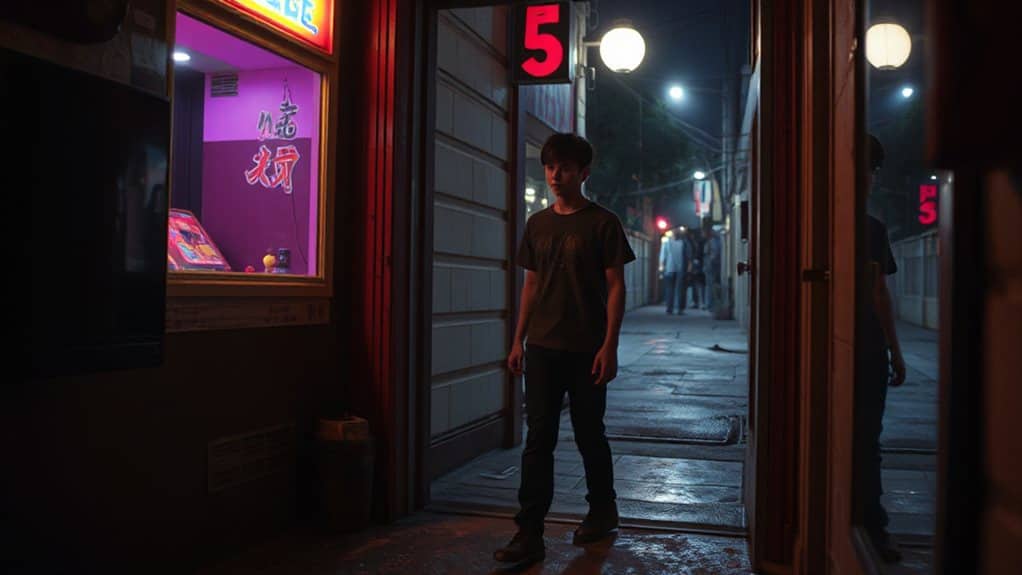
If you keep dreaming that a video‑game character steps out of the screen and replaces you, those recurring identity‑loss scenarios can be a red flag for dissociative disruption.
Repeated dreams of switching selves, blurred reality, or loss of personal control often mirror depersonalization, derealization, or early signs of dissociative identity disorder.
Pay attention when these visions align with waking memory gaps, intense distress, or unexplained amnesia.
Practical Strategies to Reduce Dissociative Dream Triggers
Grounding, cognitive reorientation, and nervous‑system regulation together form a practical toolkit for lowering the frequency and intensity of dissociative dream triggers.
You can start with the 5‑4‑3‑2‑1 sensory method, pair it with slow breathing, and use cold water or textured objects for strong input.
Naming your location, counting backward, and describing the room reestablish orientation.
Regular sleep, balanced meals, and gentle yoga keep your nervous system stable.
When to Seek Professional Help for Dream‑Related Dissociation

If you notice that the dissociative feelings from your game‑character dream are persisting beyond the night and start to interfere with work, school, or relationships, that’s a clear signal that professional help may be needed.
Frequent memory gaps, a sense of unreality, or a growing detachment from your own identity can indicate a deeper issue than a normal vivid dream.
When these symptoms become severe, frequent, or are accompanied by safety concerns such as self‑harm thoughts, reaching out to a qualified mental‑health provider is essential.
Persistent Persistent Dissociative Symptoms
Even when the vividness of a dream fades, the lingering sense of detachment can persist, and that persistence is what separates ordinary day‑dreaming from a pattern that may require professional attention.
Persistent dissociative symptoms often appear as repeated “blanking out” episodes, cause anxiety, and may involve safety concerns.
If you notice frequent disconnection, fear, or impulsive behavior, consult a trauma‑informed therapist for evaluation and possible treatment.
Impact on Daily Functioning
Persistent dissociative symptoms don’t just linger in the mind; they can start to erode your ability to function day‑to‑day.
You may miss deadlines, feel detached during meetings, or experience memory gaps that confuse reality.
If these issues worsen under stress, cause safety concerns, or lead to impulsive or suicidal thoughts, seek professional evaluation promptly.
Early help, often through a GP and mental‑health specialist, can prevent further disruption.
And Finally
You’ve learned that video‑game avatars can surface in dreams when memory, media exposure, and self‑image intersect, often triggering dissociative feelings. Recognizing whether these episodes are symbolic, transient, or indicative of deeper depersonalization helps you gauge their significance. If the dreams recur, intensify, or impair daily functioning, consider professional guidance. Meanwhile, maintaining regular sleep habits, limiting intense gaming before bed, and grounding techniques can reduce trigger frequency and support healthier dream patterns.

Seraphina Lumina is a dream interpretation and symbolism researcher with a passion for exploring the connections between dreams, emotions, relationships, spirituality, and personal growth. She draws on traditional dream symbolism, psychological perspectives, and spiritual traditions to help readers make sense of their night-time experiences and the themes that may appear in them.