
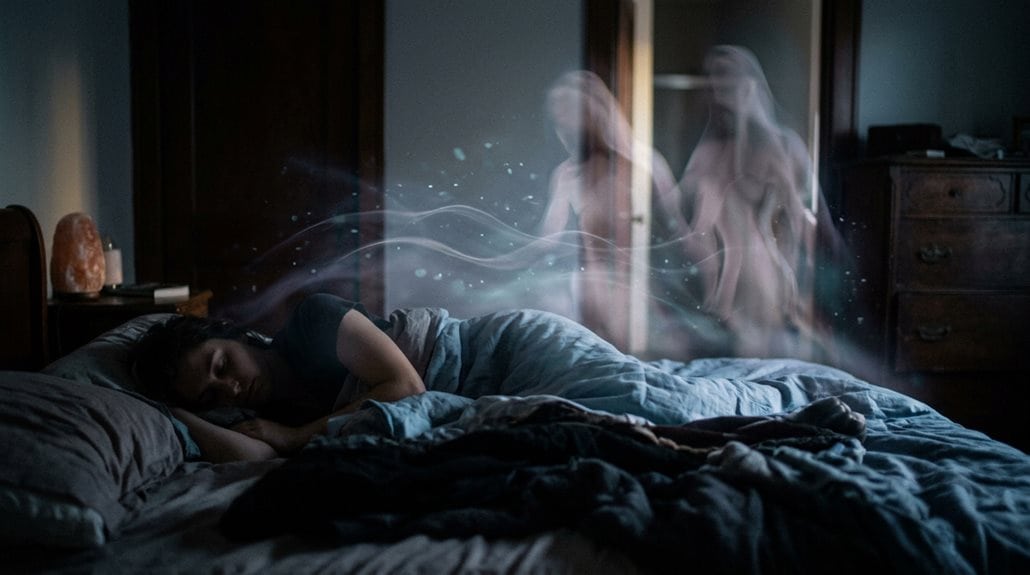
A hypnagogic hallucination occurs when you experience vivid sensory images or sounds as you move from wakefulness to sleep. These episodes often include visual patterns, faces, or animals, along with sensations like floating or falling. They are caused by brain shifts during sleep onset, influenced by factors such as sleep disorders, stress, or certain medications. While usually harmless, understanding their signs and causes can help you manage or recognize underlying issues if they persist. Exploring further reveals how to better identify and cope with these experiences.
What Are Hypnagogic Hallucinations?
Hypnagogic hallucinations are brief, vivid perceptual experiences that occur as you shift from wakefulness into sleep.
During the sleep shift, you may experience visual imagery like geometric patterns or faces, along with auditory experiences such as voices or music.
These sensory experiences are usually harmless and occur within the sleep-wake cycle, often linked to sleep disorders. In some traditions, spiritual meanings are also explored when unusual nighttime experiences feel especially vivid or symbolic.
What Causes Hypnagogic Hallucinations?
Hypnagogic hallucinations often arise when the brain shifts unevenly between wakefulness and sleep, particularly during stage 1 of NREM sleep.
This transition can be influenced by underlying sleep disorders like narcolepsy or insomnia.
Certain medications, such as antidepressants, may also increase their frequency by affecting neural activity during this period.
Additionally, factors like irregular sleep patterns, stress, or sleep deprivation can trigger or intensify these hallucinations.
This highlights the complex interplay of neurological and behavioral factors. Sleep-related experiences like sleep paralysis can also blur the line between dreaming and waking, sometimes adding vivid sensory impressions.
Sleep Disorders Connection
Sleep disorders play a significant role in the occurrence of hypnagogic hallucinations, as disruptions in normal sleep patterns can increase their frequency and intensity.
Conditions like narcolepsy, sleep paralysis, and excessive daytime sleepiness often involve irregular sleep schedules, sleep deprivation, or stress. These factors affect sleep shifts and may signal underlying neurological or psychiatric conditions, heightening hallucination risk.
Medication and Substance Effects
Certain medications and substances can markedly influence the likelihood of experiencing hypnagogic hallucinations, especially when they alter normal sleep patterns.
Sleep aids, alcohol, recreational drugs, and withdrawal can disrupt sleep architecture, affecting neurochemical activity in neurotransmitters like serotonin and GABA. These changes can increase both the frequency and intensity of hallucinations during sleep onset.
How Do You Recognize the Signs and Sensory Experiences?
Recognizing the signs of hypnagogic hallucinations involves paying close attention to the sensory experiences that occur as you shift into sleep.
During sleep onset, you might notice vivid imagery, such as geometric patterns, faces, or animals, along with auditory hallucinations like voices or sounds.
Physical sensations, such as falling or floating, often accompany these brief episodes, aiding hallucination recognition.
In some spaces, warm star LEDs are used to create a gentle ambient glow that can feel calming as sleep approaches.
Are Hypnagogic Hallucinations Dangerous or Harmful?
Although hypnagogic hallucinations are generally harmless, understanding their potential risks is important, especially if they occur frequently or become intense.
While they mostly happen during sleep shift and don’t cause physical harm, high hallucination intensity or sleep disruption can contribute to sleep disorders or mental health concerns.
Consulting medical care is recommended when hallucinations cause anxiety or worsen sleep quality.
For people whose sleep is already being disrupted, comfort factors like weighted blankets may help support a more restful routine.
How Can You Naturally Reduce or Manage Hypnagogic Hallucinations?
Managing hypnagogic hallucinations naturally begins with establishing healthy sleep habits, as consistent routines can considerably reduce their frequency.
Improving sleep hygiene by creating a calming sleep environment, maintaining a regular sleep schedule, and practicing relaxation techniques like deep breathing can enhance sleep quality.
Addressing sleep disorders and reducing stress through calming practices can also help stabilize sleep patterns and minimize hallucinations. During periods of high stress, dream content can become more vivid and unsettling, making calm routines even more important.
When Should You Seek Medical Help for Hypnagogic Hallucinations?
If hypnagogic hallucinations become frequent, intense, or disruptive, it’s important to contemplate seeking medical help.
Persistent hallucinations during sleep onset, daytime hallucinations, or those linked with sleep disturbances, confusion, or mental health changes may indicate underlying neurological or psychiatric conditions.
A healthcare professional can assess for sleep disorders and provide appropriate diagnosis and treatment.
In some cases, threshold experiences can blend memory and imagination, making vivid dream-like visions feel especially real.
Wrapping Up
Understanding hypnagogic hallucinations involves recognizing their signs, causes, and potential impacts on sleep health. While often benign, they can sometimes indicate underlying issues requiring medical attention. Managing them naturally through sleep hygiene and stress reduction can be effective, but persistent or distressing experiences should prompt professional evaluation. By staying informed and attentive to your symptoms, you can better steer through these phenomena and maintain overall sleep well-being.

Seraphina Lumina is a dream interpretation and symbolism researcher with a passion for exploring the connections between dreams, emotions, relationships, spirituality, and personal growth. She draws on traditional dream symbolism, psychological perspectives, and spiritual traditions to help readers make sense of their night-time experiences and the themes that may appear in them.