
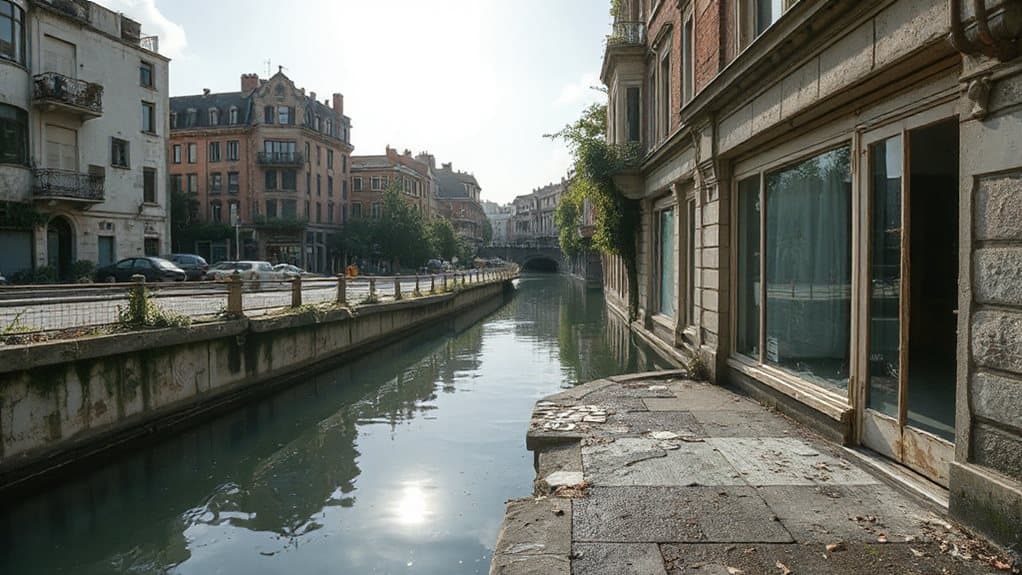
You’re seeing crumbling streets and empty plazas because your brain is stitching together fragmented memories during sleep, turning neglected ambitions into a forgotten cityscape. The ruins symbolize untapped potential, while the silence reflects a lack of support for those goals. Jungian theory sees the city as an archetype that balances conscious attitudes, and neuroscience links the imagery to hippocampal reactivation and REM‑driven spatial networks. Recognizing these cues can help you identify hidden pathways and set concrete steps toward personal growth, and the next section shows how.
Forgotten City Dream Symbolism: Missed Opportunities
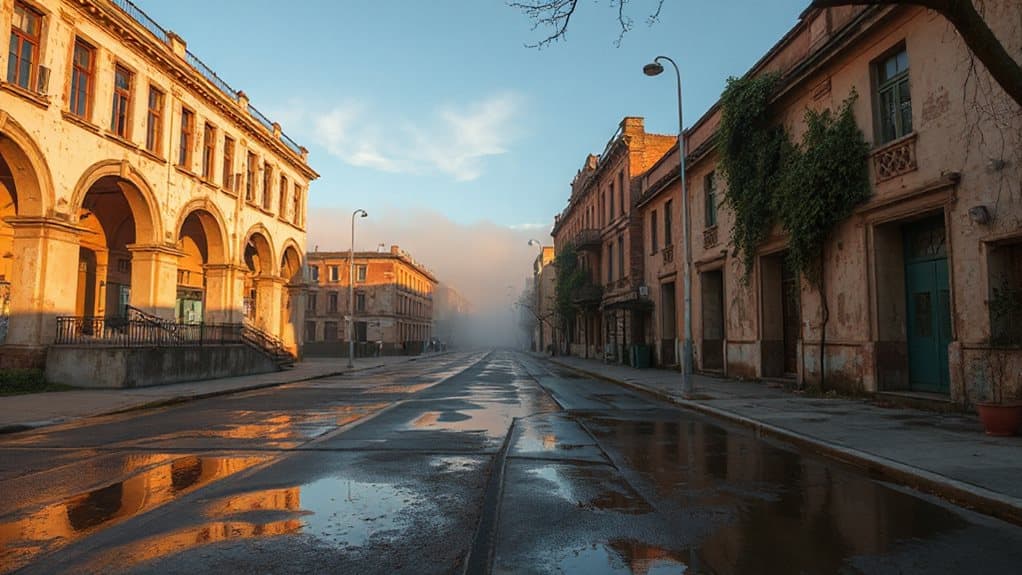
What does it mean when a forgotten city appears in your dream? You see crumbling streets and empty plazas, and they symbolize ambitions you once cherished but abandoned. The decay reflects neglected talents and unrealized potential, while the silence highlights lack of nurturing. Sometimes this scene parallels the emotional overload seen in sleep paralysis, where inner conflicts leave you feeling stuck despite conscious awareness. Recognizing this imagery can reveal untapped genius, urging you to revive those dormant aspirations before they fade entirely. This motif often mirrors the weight of the past and unresolved trauma that lingers in the subconscious.
How Memory Consolidation Shapes Forgotten City Dream Landscapes
When the crumbling streets of a forgotten city appear in a dream, they often reflect the brain’s ongoing effort to integrate fragmented memories into a stable, long‑term structure.
You notice that hippocampal reactivation during sharp‑wave ripples stitches recent experiences into cortical networks, while slow‑wave sleep spindles and oscillations fine‑tune synaptic connections.
Disruptions or disease can warp these processes, leaving the dreamscape fragmented or distorted.
During REM, the brain’s posterior hot zone and related spatial networks help construct these city-like dreamscapes, blending memory fragments with emotional tone into a coherent—if sometimes surreal—environment.
Jungian & Neuroscientific Theories of Forgotten City Dreams
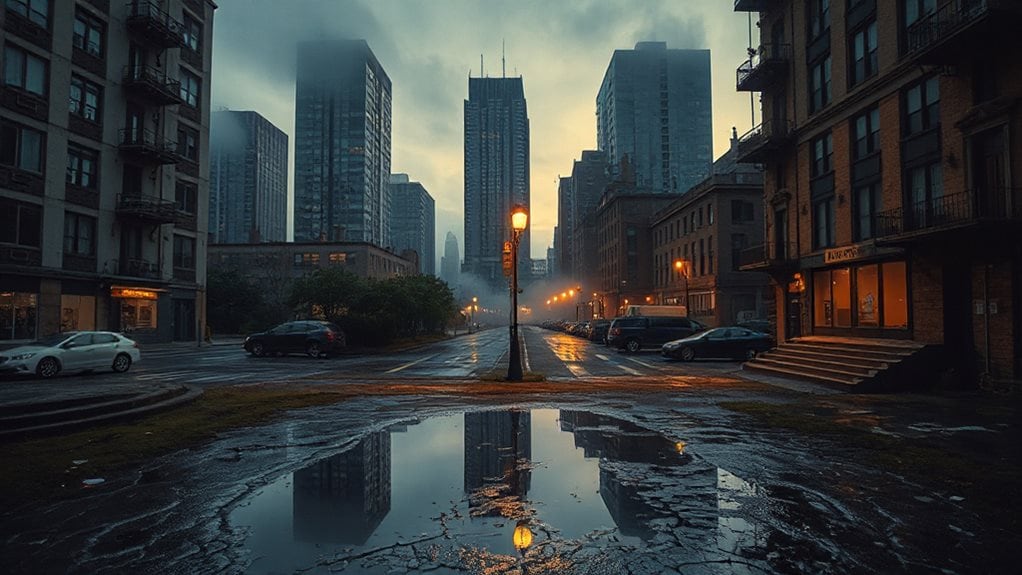
How does a crumbling metropolis in a dream reveal the interplay between Jungian compensation and modern neuroscience? You see the city as a symbolic archetype that balances neglected conscious attitudes, while neural pattern‑completion mechanisms condense meanings. The brain’s homeostatic drive mirrors Jung’s compensatory function, linking personal associations to collective unconscious motifs. This fusion creates prospective insight, aligning unconscious creativity with forward‑looking goals. During these city dreams, the same posterior cortex regions that help generate dream imagery also recombine fragmented memories into vague, familiar‑yet‑strange urban landscapes.
Common Elements in Forgotten City Dreams: Ruins, Empty Streets, Hidden Doors
Ever wondered why forgotten‑city dreams keep returning to the same motifs? You notice crumbling ruins that hint at untapped potential buried under daily doubt, empty streets that mirror isolation and directionless transition, and hidden doors that invite you into uncharted psyche territories. Each element serves as a symbolic cue—ruins signal dormant genius, streets reflect social overwhelm, and doors suggest a quest for deeper self‑understanding. Much like dreams of learned helplessness expressed through injured animals, these forgotten‑city scenes can surface feelings of powerlessness and unresolved emotional strain woven into your inner landscape.
How to Turn a Forgotten City Dream Into Personal Growth
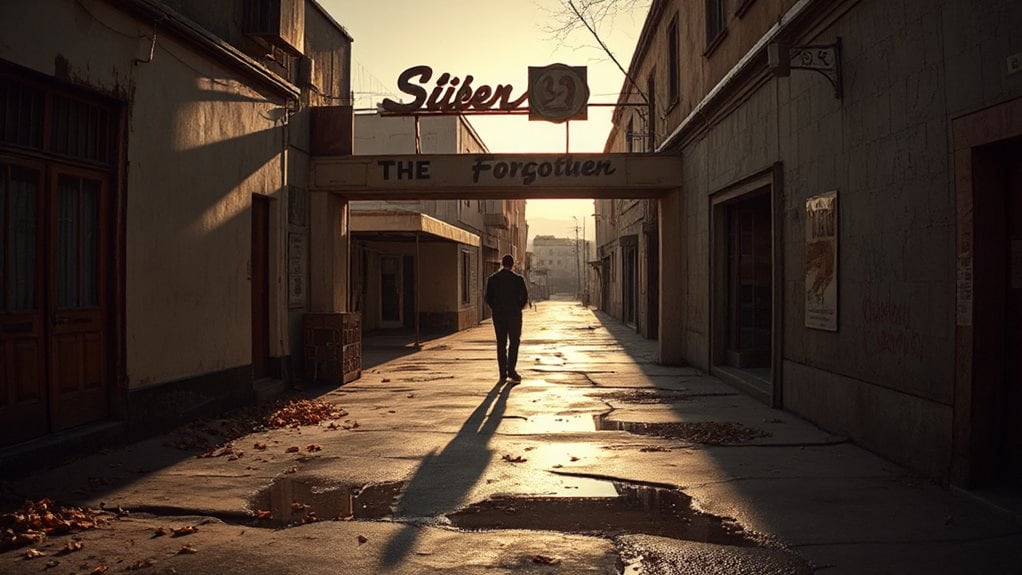
The motifs of crumbling ruins, empty streets, and hidden doors already hint at deeper emotional needs, so the next step is to convert those symbols into concrete personal growth. As you reflect, notice whether any animal figures appeared in or around the city, since such animal archetypes can reveal neglected instincts or compassionate drives that are also asking to be integrated.
Write down the dream, identify the underlying need—security, belonging, or self‑actualization—and map it to a specific goal.
Break the goal into measurable steps, track progress, and reflect regularly to integrate the insight into daily life.
Wrapping Up
You’ve seen how a forgotten‑city dream mirrors missed chances and lingering memories, shaped by memory consolidation and Jungian archetypes. The recurring motifs—ruins, empty streets, hidden doors—signal unresolved potential. By interpreting these symbols, you can pinpoint areas where you’ve stalled and devise concrete steps to reengage. Turning the dream into a growth plan involves acknowledging the past, setting clear goals, and actively rebuilding the pathways the subconscious has highlighted.

Seraphina Lumina is a dream interpretation and symbolism researcher with a passion for exploring the connections between dreams, emotions, relationships, spirituality, and personal growth. She draws on traditional dream symbolism, psychological perspectives, and spiritual traditions to help readers make sense of their night-time experiences and the themes that may appear in them.