

You’re seeing a ghost in the doorway because your mind flags a blocked transition, often a lingering regret or unfinished business from the past that prevents forward movement. The ghost can be friendly, offering comfort, hostile, provoking fear, or distressed, reflecting inner turmoil. It signals a psychological threshold you haven’t crossed, tied to repressed memories or ancestral patterns. Shadow‑work—labeling emotions, mapping triggers, and using IFS—helps you process the barrier. If you keep exploring, you’ll discover practical steps to close the doorway.
What Does a Ghost‑at‑the‑Doorway Symbolize?
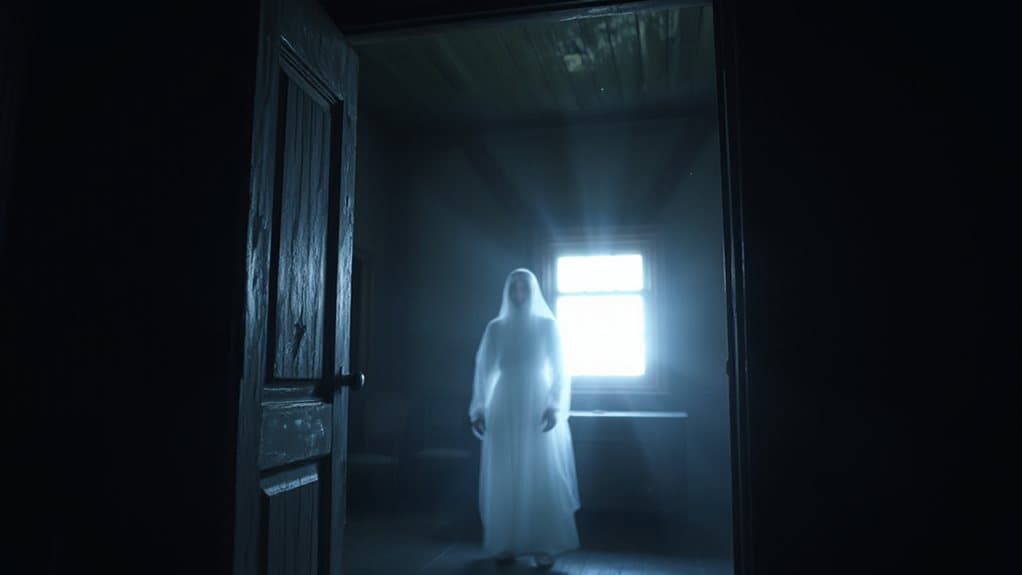
What does a ghost standing in the doorway really signify? You see a blocked transition, a barrier that keeps you from moving forward. It signals hesitation about choices, lingering regrets, and unfinished business that still influences you. The spectral figure may also represent repressed memories, ancestral patterns, or a spiritual message urging integration. In short, it marks a psychological threshold you haven’t yet crossed. This scene often reflects a closed door symbolizing an obstacle that prevents you from accessing new opportunities. In some cases, this ghostly threshold can mirror the unnerving stillness of sleep paralysis, where the mind is awake but the body remains frozen between states.
How Doorways Block Personal Growth
Why do doorways often feel like invisible walls that halt progress? You stand at a threshold, and unresolved past experiences create a lingering corridor that traps you between trauma and peace. Fear, anxiety, and ego‑driven patterns block the passage, while unopened or reopened doors prevent you from moving forward. Recognizing these barriers lets you close old doors, release fear, and step through new opportunities. In dream symbolism, this “stuck in the doorway” feeling is often reinforced when low dream recall and unprocessed emotions keep you from fully seeing, understanding, and integrating the messages your dreams are offering about the past.
Is the Ghost Friendly, Hostile, or Distressed?

When the dream’s focus shifts from the doorway’s blocking effect to the spirit standing within it, the key question becomes whether the ghost feels friendly, hostile, or distressed.
A friendly ghost appears youthful, offers a hand or a comforting quilt, and smiles, suggesting reassurance and love.
A hostile ghost feels shadowy, pursues you, and evokes unease, reflecting unresolved fear.
A distressed ghost signals trapped anxiety, locked doors, or an inability to close, indicating inner turmoil.
Sometimes, the way you emotionally respond to the ghost mirrors deeper identity shifts and boundary issues, much like dreams of living in another person’s house.
Shadow‑Work Techniques for Confronting the Threshold
How can you confront the threshold that a dream‑ghost creates in your waking life? Label the emotion you feel, then write it for fifteen minutes over four days; this quiets the amygdala and reduces stress. Use two‑way attention, shifting from “it” to “you” questions, and map the shadow by noting triggers in relationships. In the same way that an out‑of‑body experience can feel more real than a dream, these threshold dreams often carry a heightened sense of veridicality, signaling deeper layers of self that are ready to be integrated. Apply IFS to merge the ego and alter‑ego, then own the feeling in first‑person language, releasing it through forgiveness.
Step‑by‑Step Plan to Resolve the Unfinished Business
You start by pinpointing the exact unresolved issues that keep resurfacing, whether they’re lingering regrets or unfinished tasks. Then you set up an honest dialogue, using “I” statements and allowing the other party to respond without interruption, which helps both sides clarify needs and expectations. In this process, notice any intense emotional reactions or harsh judgments that may signal shadow projection, revealing unresolved traits you’ve disowned. Finally, you translate the insights into a concrete closure plan—scheduling follow‑up meetings, outlining actionable steps, and noting milestones so the unfinished business can be systematically resolved.
Identify Core Unfinished Issues
A clear first step in tackling the unfinished business that a ghost‑in‑the‑doorway dream signals is to map out the specific emotional threads that remain untied.
List unresolved feelings, unmet needs, and “if only” regrets from past relationships, losses, or missed goals.
Note recurring dreams or intrusive thoughts that echo these gaps.
Identify patterns of rumination, guilt, or lingering anger, and assess how they affect sleep, work, and daily focus.
This inventory creates a concrete foundation for further resolution.
Engage in Honest Dialogue
When you step into the dialogue, start by setting a clear, safe environment that minimizes tension and protects personal boundaries. Use calm tone, neutral posture, and perhaps a neutral facilitator to keep power dynamics balanced. Listen fully, paraphrase, and validate feelings without blame. Speak with “I” statements, pause when emotions rise, and focus on shared goals to sustain constructive, honest conversation.
Create a Concrete Closure Plan
Begin by mapping the unfinished emotional threads that surfaced in the dream, noting each symbol—such as the ghost and the doorway—and the feelings they evoked.
Next, list concrete actions: journal the sensations, set a deadline to address related memories, seek a therapist or trusted confidant, and create a ritual that symbolically closes the doorway.
Review progress weekly, adjust steps, and document resolution.
When to Seek Guidance for Repeating Ghost‑Doorway Dreams
You can notice that the dreams keep resurfacing whenever you’re already feeling emotionally triggered, and that pattern often signals that the subconscious material isn’t being processed. If the anxiety tied to these visions starts to climb, disrupting your daily focus or sleep, it’s a clear sign that professional guidance could help you untangle the underlying issues. Paying attention to these escalating signs lets you intervene before the distress becomes more entrenched.
Persistent Persistent Emotional Triggers
If you notice that the same ghost‑doorway scene keeps resurfacing night after night and the emotional sting grows stronger each time, it’s a clear sign that underlying triggers are persisting. Recurrent imagery often signals unresolved trauma, and heightened distress can create a feedback loop that amplifies pain.
Persistent belief in dream meaning intensifies intensity, while chronic patterns may indicate PTSD or personality‑disorder‑related nightmares, suggesting professional guidance is advisable.
Escalating Anxiety Levels
The lingering emotional sting from persistent ghost‑doorway scenes often signals that anxiety is climbing, and the frequency of those dreams can serve as a practical gauge for when professional help becomes advisable.
Studies show nightmares correlate strongly with anxiety (r = .616) and amplify distress. If you notice nightly repetitions, heightened worry, or interference with daily functioning, consider consulting a therapist to break the cycle.
Wrapping Up
You’ve learned that a ghost at the doorway often signals unfinished business or a blocked transition, while the doorway itself represents a threshold of personal growth. By identifying whether the spirit feels hostile, friendly, or distressed, you can choose appropriate shadow‑work techniques, such as journaling or guided visualization, to confront the underlying issue. Follow the step‑by‑step plan to address lingering emotions, and consider professional guidance if the dream repeats, ensuring you move beyond the symbolic impasse.

Seraphina Lumina is a dream interpretation and symbolism researcher with a passion for exploring the connections between dreams, emotions, relationships, spirituality, and personal growth. She draws on traditional dream symbolism, psychological perspectives, and spiritual traditions to help readers make sense of their night-time experiences and the themes that may appear in them.